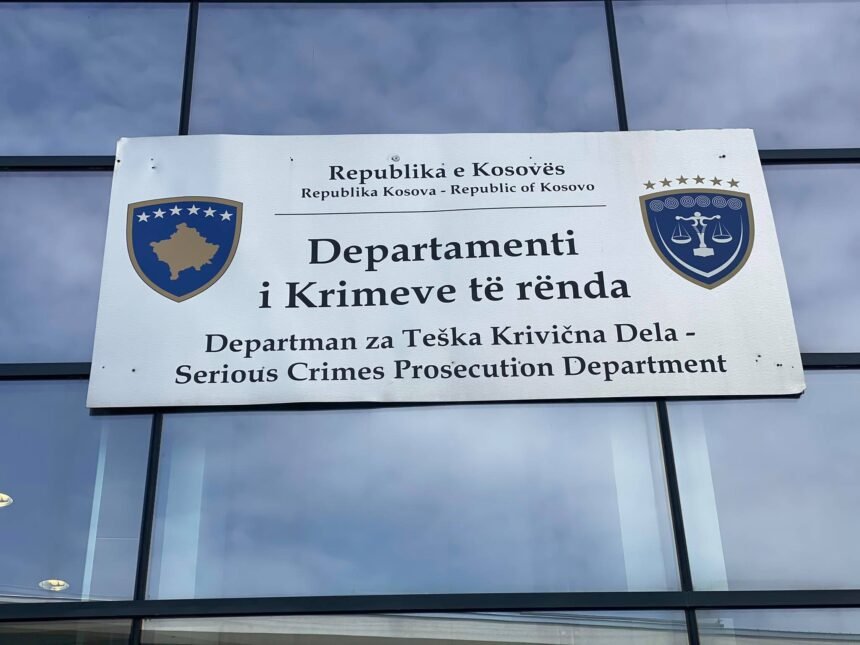
Eleven indictments for war crimes were filed by December of last year, according to the Special Prosecution of the Republic of Kosovo.
During this period, 36 individuals were charged, 33 of them for trial in absentia. The Special Prosecution stated that the total number of indictments filed in absentia now stands at 20, covering 102 defendants.
“The Special Prosecution of the Republic of Kosovo informs you that during 2025, specifically until December 1 of this year, 11 indictments were filed for the criminal offense of ‘War crimes against the civilian population.’ During this period, 36 persons were charged, of whom 33 are charged for trial in absentia, while eight requests for detention were submitted against 10 persons. The total number of cases with indictments is 74 cases with 80 indictments against 216 persons. The number of indictments submitted for trial in absentia is 20, involving 102 persons,” the prosecution said in its response.
Former President of the Supreme Court, Fejzullah Hasani, spoke about the difficulties Kosovo’s authorities face in prosecuting war criminals. He stressed that a long time has passed and that “evidence is easily lost.”
“It was right to allow trials in absentia for war crimes—crimes against humanity, genocide, and war crimes. Even though, in terms of effects, I do not believe they will have many immediate results, because the law states that once such persons become accessible to Kosovo’s prosecution authorities, the proceedings must be retried from the beginning if they request it. The main problem is first making them accessible to serve their sentences, and second, whether verdicts become final. We know there is no cooperation with Serbia, and it is hardly believable that it would extradite such individuals. Regardless of any pressure, Serbia is not willing to hand them over. It is therefore difficult to believe they will come to Kosovo to serve their sentences, and equally problematic to expect Serbia to execute our verdicts, even if an agreement is eventually reached,” Hasani said.
Hasani added that it is crucial for Kosovo to have final verdicts for war crimes.
“These judgments may remain only on paper and never be enforced. But even so, it is important for Kosovo to have completed processes and final judgments. This strengthens Kosovo’s position in future negotiations with Serbia, so that those decisions can be enforced or the convicted individuals extradited to Kosovo to serve their sentences,” he added.
Amer Alija from the Humanitarian Law Fund said that in recent years, indictments in absentia for war crimes have become dominant.
“Over the last two or three years, trials in absentia—or indictments filed against defendants who are not present in Kosovo—have dominated compared to indictments against individuals who are arrested or present in court. As we saw this year, there was also a first-instance verdict in absentia for sexual violence as a war crime against two defendants. This is the first verdict in absentia for this type of offense. Previously, there were two or three other first-instance verdicts in absentia,” Alija said.
The Kosovo Rehabilitation Center for Torture Victims (KRCT) considers 2025 a year of justice.
Fatmire Haliti from KRCT said there has been progress in access to justice for survivors of wartime sexual violence.
“During 2025, three trials for sexual violence during the war in Kosovo were conducted and concluded, while two trials are currently ongoing. Among the three concluded cases, there is one conviction with a 15-year prison sentence, where the convicted person is serving the sentence, and the first-ever verdict in absentia for sexual violence, where two perpetrators were sentenced to 15 years in prison each. In 2025, we had the first verdict in absentia, sentencing Ivica Rajković and Dragan Denić to 15 years each. This case opened the way for others and set a standard for handling such sensitive cases, which require a series of preliminary procedures before trial,” Haliti concluded.
The first verdict in absentia was issued in 2024, sentencing Čedomir Aksić, who committed war crimes in Reçak, Mulapolc, and Petrovë—villages in the municipality of Shtime.
During the 1998–1999 war in Kosovo, more than 13,000 civilians were killed, over 20,000 women and men were subjected to sexual violence, more than 6,000 people were forcibly disappeared—1,600 of whom remain missing—and more than 800,000 people were displaced. Serbia continues to deny all these crimes committed in Kosovo.