Portugal is holding the first round of its presidential elections, with the far right leading according to opinion polls, while the center-left is struggling to secure a place in the runoff. Initial projections based on exit polls are expected to be published at 10:00 p.m. local time.
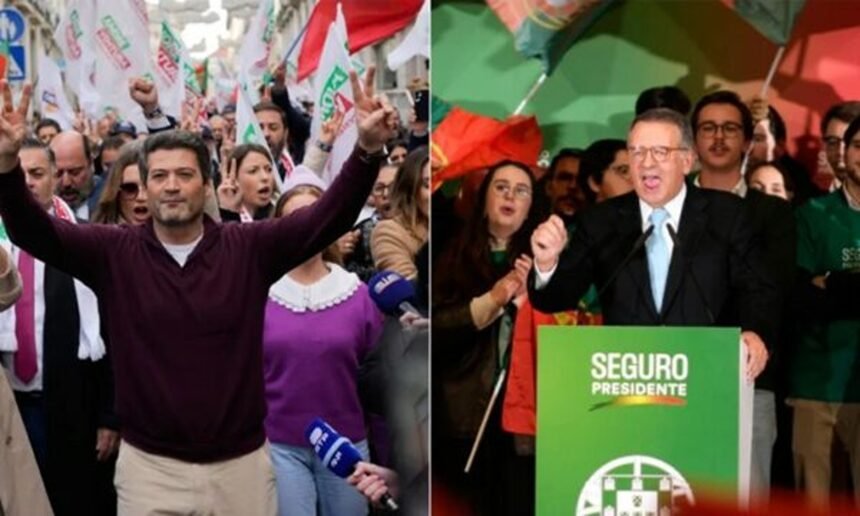
Nearly 52 years after the Carnation Revolution that overthrew António Salazar’s dictatorship in 1974, the election has turned into a political thriller. Polls indicate that André Ventura, leader of the far-right Chega party, is leading the first round, although his chances of winning the second round on February 8 are considered limited.
In second place, the center-left socialist candidate António José Seguro appears to hold a slight advantage over liberal MEP João Cotrim Figueiredo.
Record Number of Candidates
A total of 11 candidates are competing — a record number for Portugal. Only two are widely seen as favorites to advance to the second round: Luís Marques Mendes, the candidate backed by the governing party, and Admiral Henrique Gouveia e Melo, running as an independent.
The winner will succeed conservative President Marcelo Rebelo de Sousa, who was elected twice in the first round. Since the restoration of democracy, Portugal has gone to a second round only once, in 1986.
Rise of the Far Right
André Ventura, the only candidate who also ran in the 2021 presidential election, then received 11.9% of the vote. Since then, his party Chega has seen rapid growth, winning 22.8% of the vote and 60 seats in the May 2025 parliamentary elections, surpassing the Socialist Party and becoming the main opposition force.
According to the Teneo analysis group, a strong far-right result would mark a new chapter for Portuguese democracy and deepen divisions within the right, between traditional and radical forces.
Ventura closed his campaign by urging other right-wing parties not to block a potential second-round showdown with the socialist candidate, promising to “restore order” in the country.
Call for Democratic Unity
Facing the prospect of electing a far-right president for the first time since the fall of the dictatorship, António José Seguro called for unity and moderation, presenting himself as a defender of democracy and public services.
“I call on all democrats, progressives, and humanists to support me with their vote,” he said at his final campaign rally.
Portugal’s president is elected by direct popular vote and, while lacking executive power, plays a key role in times of crisis and has the authority to dissolve parliament and call new elections.