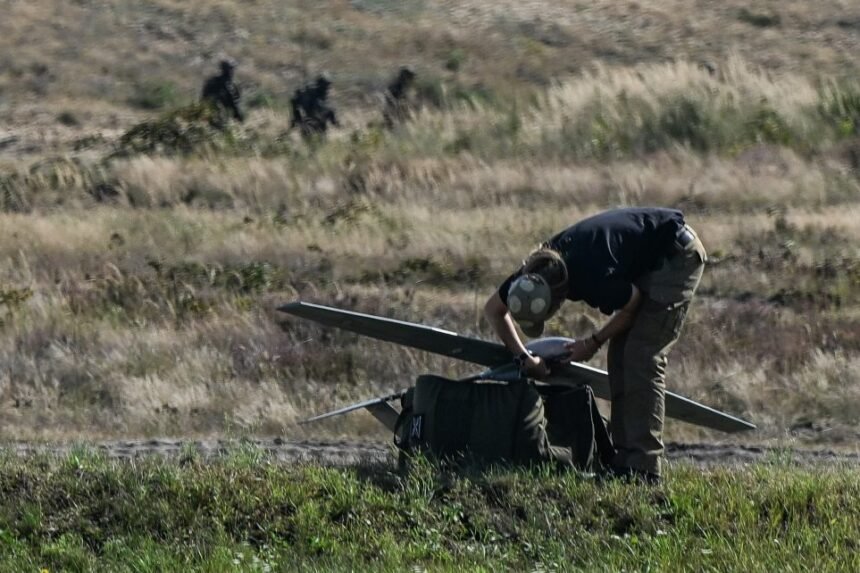
Poland has unveiled a €2 billion ($2.3 billion) anti-drone defense system, set to become the largest of its kind in Europe, as Warsaw accelerates preparations against increasing Russian military and hybrid threats.
According to Cezary Tomczyk, Secretary of State at Poland’s Ministry of Defense, the new system—named “San,” after a river in southeastern Poland—will be deployed along Poland’s northern and eastern borders and is expected to be fully operational by the summer of 2026, significantly earlier than the European Union’s planned “drone wall.”
San will function as the lowest layer of Poland’s integrated air defense network, complementing existing systems such as Wisła (long-range), Narew (short-range), and Pilica Plus (very short-range).
“This is a system built for wartime defense purposes,” Tomczyk said, adding that parts of it can also be used in peacetime.
A Response to Russia’s Hybrid Warfare
Poland’s move reflects a direct response to Russia’s expanding hybrid warfare campaign, which includes drone incursions, sabotage, cyberattacks, and infrastructure disruption across NATO’s eastern flank. Recent incidents—such as the sabotage of a railway linking Warsaw to Ukraine—have underscored the limitations of long-term European defense plans.
While the EU’s defense roadmap aims for readiness by 2030, Poland has concluded that the current threat environment requires immediate, operational solutions. As NATO’s third-largest military and the largest economy in Eastern Europe, Poland has become a frontline testing ground for new defensive doctrines.
A Broader Defense Strategy
San is part of a wider Polish security transformation, which also includes:
- East Shield, a $2.5 billion project involving 700 kilometers of physical fortifications and advanced defense systems along the eastern border
- Deployment of 10,000 troops to protect critical infrastructure under Operation Horizon
- Introduction of mobile anti-drone systems and a civilian reporting app for sabotage and hybrid threats
Together, these measures demonstrate Poland’s integration of conventional war preparedness with counter-hybrid defense, a strategy increasingly viewed as a model for NATO.
Shaping NATO’s Future Response
At a time when confidence in long-term U.S. security commitments is being questioned, Poland is emerging as a leading force in shaping NATO’s near-term hybrid defense posture.
Tomczyk emphasized that future responses must go beyond passive defense, calling for symmetrical and proportionate deterrence against Russian actions.
“NATO, the EU, and their members should respond adequately to what Russia is doing,” he said. “That is exactly what we will do.”
As Russia intensifies pressure on NATO’s eastern borders, Poland is positioning itself not only as a frontline state—but as a strategic leader, pushing the alliance toward faster, more assertive defense policies in an increasingly volatile security environment.