The Kremlin has confirmed that the first-ever trilateral peace negotiations between the United States, Russia, and Ukraine are taking place today in Abu Dhabi, marking a potentially pivotal moment in efforts to end the war in Ukraine.
The high-level meeting follows intense diplomatic activity over the past 48 hours, including talks between U.S. President Donald Trump and Ukrainian President Volodymyr Zelensky in Davos, as well as a surprise visit by a U.S. delegation to Moscow.
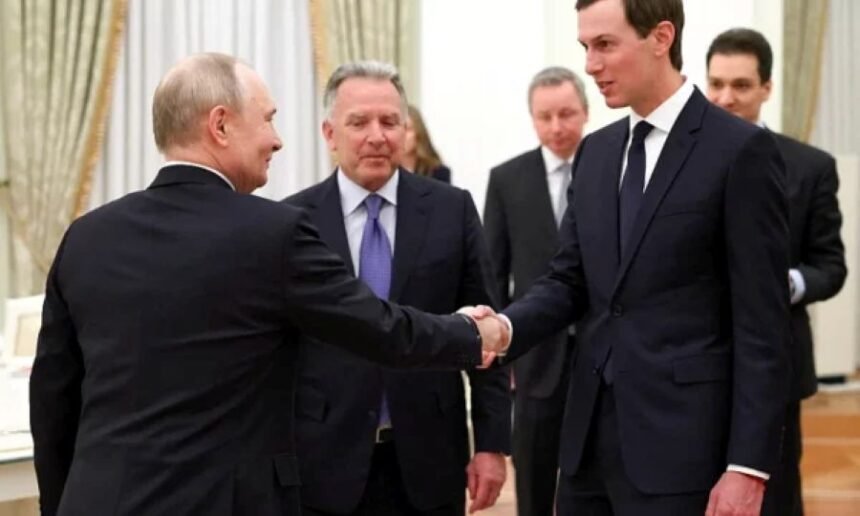
Russia’s participation was confirmed shortly after President Vladimir Putin concluded lengthy discussions in Moscow with Trump’s close envoys, namely U.S. peace envoy Steve Witkoff and Trump’s son-in-law Jared Kushner. According to the Kremlin, the meeting between Putin and Witkoff lasted more than three and a half hours and was described as “substantive, constructive, and exceptionally frank and confidential.”
However, Moscow immediately tempered expectations, signaling skepticism about the prospects for a rapid or meaningful breakthrough.
Territorial Demands at the Core of the Dispute
The Kremlin reiterated its firm position that no lasting settlement is possible without resolving territorial issues. Russian officials claim that this principle was already agreed upon during last year’s Trump–Putin summit in Alaska, while stressing that military operations will continue until a diplomatic resolution is achieved.
According to diplomatic sources, President Putin is demanding full control over the eastern regions of Donetsk and Luhansk, including areas not currently occupied by Russian forces. Kyiv has categorically rejected this proposal.
President Zelensky has warned that ceding the remaining parts of Donbas would dismantle Ukraine’s key defensive line, known as the “fortress belt,” potentially enabling deeper Russian offensives into Ukrainian territory.
Delegations Led by Senior Security Officials
President Zelensky revealed that the trilateral format was proposed by Washington at the “last minute” and finalized only after his meeting with Trump in Davos.
The delegations are led by top defense and intelligence officials:
- Ukraine: Defense Minister Rustem Umerov and Kyrylo Budanov, Chief of Staff and former intelligence chief
- Russia: Admiral Igor Kostyukov, head of Russian military intelligence
Strained Kyiv–Brussels Relations in the Background
The talks come amid visible cooling in relations between Kyiv and Brussels. Speaking in Davos, Zelensky openly criticized European leaders, accusing them of inertia and echoing rhetoric similar to that used by Trump.
“A year ago, right here in Davos, I ended my speech by saying ‘Europe must learn to defend itself.’ A year has passed, and nothing has changed,” Zelensky said.
In response, European Commission President Ursula von der Leyen highlighted the EU’s financial support, noting that over €193 billion has been provided to Ukraine, with an additional €90 billion approved for the next two years.
“Actions speak louder than words,” von der Leyen stated.
A Defining Moment for the War
Despite diplomatic frictions, Zelensky said after his meeting with Trump that a peace plan is “almost ready,” while emphasizing that Ukraine’s security guarantees must take precedence over Russian demands.
The Ukrainian president also left Davos with an agreement on a new air defense package, claiming that Russia is currently suffering losses of approximately 45,000 troops per month.
The outcome of today’s talks in Abu Dhabi could decisively shape the future course of the war in Ukraine.