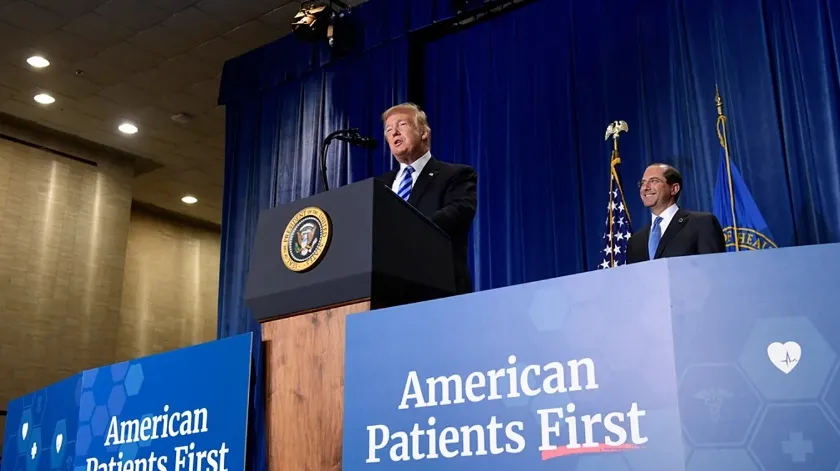
On January 22, 2026, the United States officially ended its membership in the World Health Organization (WHO), a year after former President Donald Trump initiated the controversial withdrawal process.
Trump first signed an executive order on January 20, 2025, marking the start of the U.S. exit, citing mismanagement of the COVID-19 pandemic, global health crises, failure to implement urgent reforms, and undue political influence from member states as reasons for leaving.
For decades, the U.S. contributed between $160 million and $815 million annually to the WHO, whose yearly budget ranges from $2–3 billion.
Since early 2025, U.S. health agencies, including the Centers for Disease Control and Prevention (CDC), implemented a communication freeze with the WHO, halting updates, public health guidance, and collaborations with international partners. While some communications resumed after a few weeks, U.S. agencies remain largely detached from WHO operations, affecting coordination with European and African disease control centers.
The U.S. also refused to support the WHO Pandemic Agreement adopted in May 2025, designed to strengthen global pandemic preparedness and ensure equitable access to vaccines. Additionally, the Global Health Security and Biodefense Directorate, established after the 2014–2015 Ebola outbreak, was disbanded under Trump’s administration.
On domestic policy, Secretary of Health Robert F. Kennedy introduced new dietary guidelines emphasizing animal proteins over plant-based options, diverging from WHO recommendations. Vaccine recommendations were reduced from 17 to 11, removing vaccines such as hepatitis A and B, influenza, meningococcal, and varicella.
The withdrawal also affected international aid programs. The closure of USAID ended six decades of operations. In 2023 alone, the U.S. provided $71.9 billion in foreign aid to 209 countries and regions, with 22% allocated to health programs covering HIV/AIDS, nutrition, tuberculosis, pandemics, maternal and child health, and reproductive care. Experts warn that if U.S. aid cuts continue, up to 14.1 million additional deaths could occur globally by 2030, including 4.5 million children under five, according to a study published in The Lancet.