A delegation of the European Parliament (EP) held meetings in Belgrade on Thursday with representatives of Serbia’s opposition, government officials, and civil society as part of a mission assessing the country’s progress toward European Union membership.
The delegation, led by Portuguese MEP Marta Temido and composed of nine members of the EP’s Foreign Affairs Committee (AFET), is focusing on key reform areas identified in two European Parliament resolutions on Serbia adopted last year.
Three Key Conditions for EU Accession
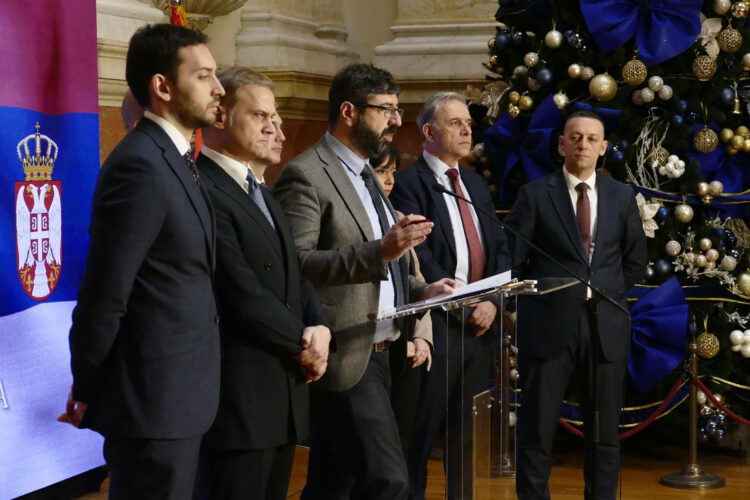
Following the meeting with opposition parties, representatives confirmed that three core conditions for Serbia’s EU accession were emphasized, including:
- Strengthening the rule of law and judicial independence
- Ensuring media freedom and fair electoral processes
- Adopting a clear and unambiguous position on the war in Ukraine
Opposition MP Borko Stefanović stated that Serbia currently fails to meet all three conditions, particularly stressing the absence of alignment with EU foreign policy regarding Russia’s invasion of Ukraine.
Opposition Raises Concerns Over Democratic Backsliding
Opposition leaders briefed MEPs on what they described as worsening political repression, including pressure on universities, attacks on journalists, politicization of the police, and stalled media reforms, particularly the failure to appoint a fully functioning Regulatory Authority for Electronic Media (REM).
MP Radomir Lazović said the opposition requested personalized EU sanctions against senior officials of the ruling Serbian Progressive Party (SNS) and called on the European People’s Party (EPP) to reconsider SNS’s membership.
“Minimal reforms must not be used to obscure the absence of genuine democratic change,” Lazović said, adding that Serbia’s EU membership by 2032 is impossible under the current government.
Government Criticism of the EP Mission
Serbian Parliament Speaker Ana Brnabić criticized the EP delegation, claiming its visit amounted to interference in Serbia’s internal affairs and alleging that the mission aimed to support anti-government protesters, rather than conduct an objective assessment.
Meanwhile, SNS officials expressed dissatisfaction with the tone and organization of the meetings, citing delays and shortened discussions.
Broad Engagement With Society
In addition to political actors, the EP delegation met with media representatives, civil society organizations, academic institutions, think tanks, and students, underlining what opposition figures described as the EU’s continued interest in democratic institutions functioning properly in Serbia.
Several opposition leaders stressed that the mission demonstrated that there is a credible pro-European alternative in Serbia, challenging the narrative that President Aleksandar Vučić is the sole guarantor of stability.