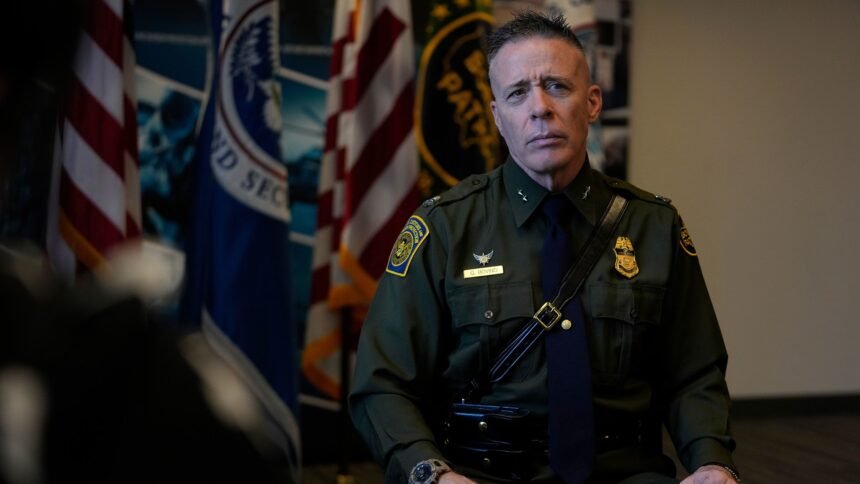
Greg Bovino, 55, is a key figure in the U.S. Border Patrol, overseeing operations targeting undocumented immigrants in multiple American cities. His family roots trace back to Calabria, Italy, with his great-grandfather arriving in the U.S. in the 1920s. Today, Bovino has become the symbol of massive raids launched under the Trump administration, not just at the border but also inside urban areas.
Bovino was called to action because the White House deemed ICE insufficient to achieve the desired number of arrests. Under his leadership, operations with dramatic names like “Trojan Horse” in Los Angeles, “Midnight Blitz” in Chicago, “Swamp Sweep” in New Orleans, and “Metro Surge” in Minneapolis have taken place.
These operations have sparked protests and accusations of excessive force. Videos from Minneapolis show tactical smoke and pepper spray used even against individuals already on the ground. A federal appeals court previously suspended a ruling limiting such practices, encouraging more aggressive enforcement.
In Chicago, during an operation against the Tren de Aragua gang, families and minors with no prior criminal records were also arrested. Promotional videos from the Border Patrol, often set to heavy metal music, gave the operations the feel of an action movie.
Bovino joined the Border Patrol in 1996 and became a leader in 2020. He has advocated for operations inside U.S. territory, not just along the border. On January 7, 2025, without authorization from the Biden administration, he ordered a raid in California arresting 78 Peruvian workers, labeling them as “criminals” despite investigations showing only one had a prior record. He defined illegal entry itself as a crime, aligning with his strict enforcement philosophy.
His methods have been supported by Stephen Miller, a powerful figure in the White House. Bovino has promised to arrest the “scum of society,” targeting offenses from undocumented entry to driving under the influence.
His figure has also sparked controversy over his style. The New York Times compared his military-style attire to that of the Gestapo, a comparison the Department of Homeland Security called “dangerous and unacceptable.”