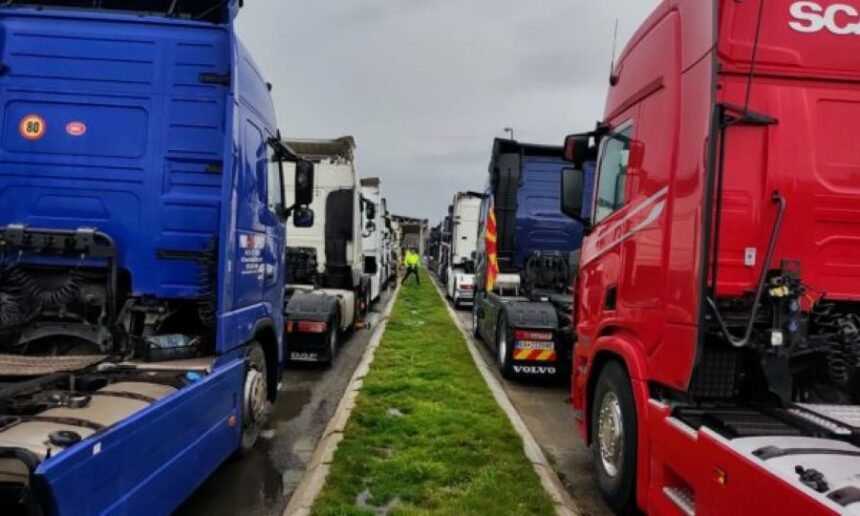
Transport companies from Serbia, North Macedonia, Bosnia and Herzegovina, and Montenegro have blocked border crossings to the Schengen area, in protest against the European Union’s new entry-exit control system.
The blockade, initially announced to last seven days, has already caused concern for Kosovo’s businesses and trade flows.
Kosovo Chamber of Commerce Warns of Serious Consequences
The Kosovo Chamber of Commerce (OEK) expressed its concern over the protests, citing serious disruptions to normal business operations and international trade.
“These developments have directly affected the export and import of goods to and from EU countries, causing significant delays, additional costs for companies, and a real risk of disrupting supply chains,” the Chamber stated.
OEK emphasized that the situation impacts both Kosovo’s economy and the broader regional supply chain, underlining the urgency for institutional intervention.
Appeal to the European Union
Lulzim Rafuna, Chairman of the Kosovo Chamber of Commerce and WB6 CIF Board Chair, has repeatedly raised the issue with EU institutions, calling for a sustainable and systemic solution that ensures the free flow of trade between the EU and Western Balkan countries.
OEK’s statement urges the EU for:
- Immediate institutional intervention to restore normal international road transport operations.
- A long-term solution to prevent further disruptions in regional trade.
“Such an approach serves the shared interests of the EU and Western Balkan economies and is a prerequisite for economic stability, trade integration, and sustainable regional development,” the Chamber added.
OEK reaffirmed its commitment to protecting business interests and contributing to institutional dialogue with European partners, ensuring that trade remains free, secure, and functional.