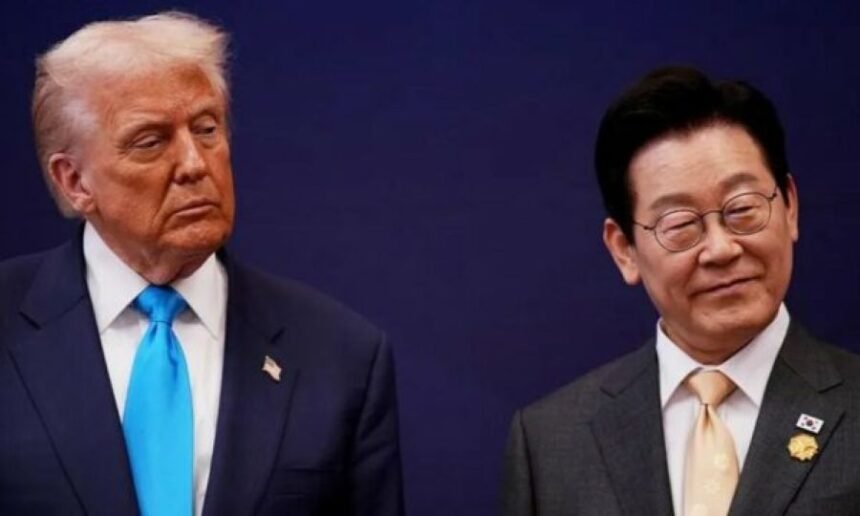
U.S. President Donald Trump has announced a sharp increase in tariffs on imports from South Korea, raising them to 25%, accusing Seoul of failing to comply with a trade agreement reached last year.
In a post on social media, Trump said the tariffs would rise from 15% to 25% on a wide range of South Korean goods, including automobiles, timber, pharmaceutical products, and what he described as “all other reciprocal tariffs.”
Trump argued that South Korean lawmakers have been slow to ratify the agreement, while the United States had already moved quickly to reduce its own tariffs in line with the deal.
Seoul Seeks Urgent Talks
South Korea responded by stating that it had not received any formal notification of the tariff increase and called for urgent negotiations with Washington to resolve the issue.
The trade agreement reached in October 2025 included a South Korean commitment to invest $350 billion in the United States, with part of the funding earmarked for the shipbuilding sector.
In November, both countries agreed that U.S. tariffs on certain products would be reduced once South Korea began the ratification process. The agreement was submitted to South Korea’s National Assembly on November 26 and is currently under review, with local media reporting it is likely to be approved in February.
Impact on Businesses and Broader Trade Tensions
Under the new measures, U.S. companies importing South Korean goods will be required to pay the 25% tariff, potentially increasing costs for American businesses and consumers.
The move is part of Trump’s broader hardline trade policy, which has increasingly strained relations with key allies. Over the weekend, Trump threatened Canada with a 100% tariff should it conclude a trade deal with China.
Earlier, he also warned of new import taxes on eight countries, including the United Kingdom, after they opposed U.S. plans regarding Greenland, an autonomous territory of Denmark and a NATO member. Although Trump later withdrew the Greenland-related tariff threat, citing progress toward a future agreement, the episode heightened tensions between Washington, Denmark, and other NATO allies.