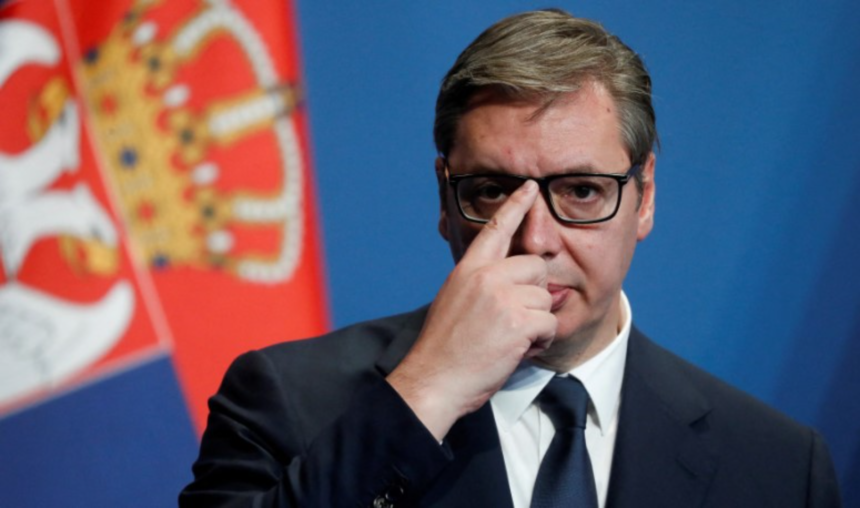
President Aleksandar Vučić announced the creation of an “operational team” to accelerate Serbia’s EU integration process, days after returning from Davos.
The team will reportedly include Minister for European Integration Nemanja Starović, Finance Minister Siniša Mali, Justice Minister Nenad Vujić, and Parliament President Ana Brnabić, with Serbia’s EU Ambassador Danijel Apostolović appointed as team leader.
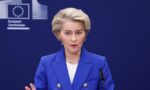
Critics argue that the initiative is more of a public relations move aimed at European Commission President Ursula von der Leyen than a genuine effort to implement reforms.
“The operational team seems intended to impress Ursula von der Leyen, showing that Serbia is taking large steps toward the EU,” said Vladimir Međak, vice president of the European Movement in Serbia.
Međak highlighted that high-level ministers will report to the ambassador, whose role is technically subordinate to them, suggesting the move is largely symbolic rather than functional.
European experts have pointed out that Serbia’s EU accession progress has stagnated for years. Since 2014, only 22 of 35 negotiating chapters have been opened, and just two have been provisionally closed. Meanwhile, the European Parliament has repeatedly criticized Serbia for democratic backsliding, weak rule of law, and lack of media freedom.
Sofija Popović from European Western Balkans emphasized that previous bursts of “EU enthusiasm” by Serbian authorities have rarely translated into actual reforms, and that the newly announced operational team may serve primarily to project an image of commitment.
“For real progress in EU accession, political will to implement long-defined reforms is far more important than creating new teams,” Popović said.
The announcement comes amid growing scrutiny from Brussels. EU officials have expressed concern over stalled reforms, and Serbia’s recent actions suggest that the government may be prioritizing appearances over substance.
Meta Description (Yoast-friendly): Serbia’s Vučić announces a new operational team for EU integration, but critics say it’s a PR move for Ursula von der Leyen as EU accession reforms remain stalled.