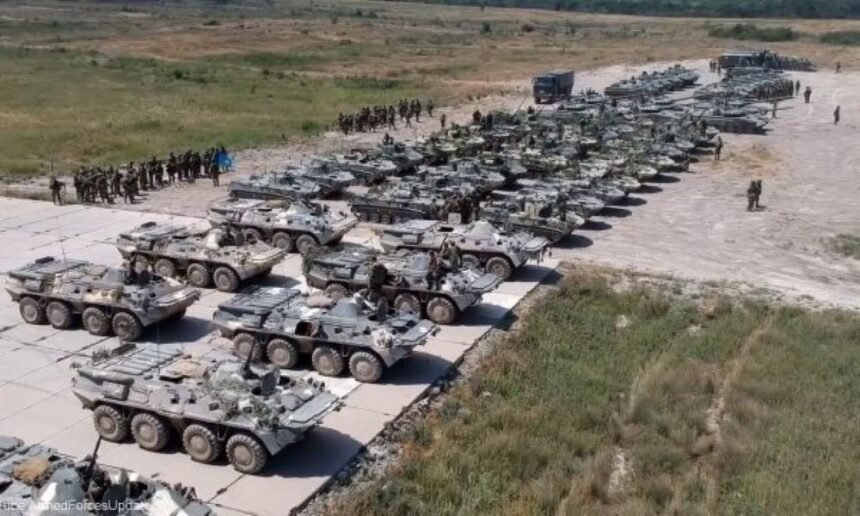
Global armament is increasingly turning into a silent power race, with states purchasing weapons at alarming rates while global tensions continue to rise. From open conflicts to strategic preparations behind the scenes, massive investments in military equipment are reshaping international security and raising serious concerns about global peace and stability.
Recently, Serbian President Aleksandar Vučić announced that Serbia aims to double its military capacity within a year and a half.
Meanwhile, Kosovo has also stepped up efforts to strengthen its defense capabilities through arms acquisitions.
Security expert Hysen Gecaj notes that Vučić’s statements should be taken seriously, but without panic.
“The growth of Serbia’s army does not automatically mean war, but it represents a potential risk for Kosovo, given Serbia’s non-recognition of Kosovo’s independence and its history of using force. Doubling military capacities disrupts the regional balance and increases insecurity, especially for non-NATO countries,” Gecaj explains.
Key points from Gecaj’s analysis:
- Serbia’s military buildup does not indicate direct war, but a strategy of destabilization targeting Kosovo through political pressure, indirect threats, and sustained tensions, particularly in the north.
- Serbia avoids confrontation with NATO, instead relying on controlled provocations, such as the Banjska incident, to test Kosovo’s and international reactions.
- The main risk for Kosovo is not classical invasion but indirect military threats, strategic blackmail, and pressure to influence Kosovo’s politics.
- Serbia’s strategy supports the narrative that “Kosovo is still an open issue”, intimidates Kosovar institutions, strengthens Serbia’s negotiating position, and keeps alive ideas of partition or deep autonomy for northern Kosovo.
- The north of Kosovo is a sensitive strategic point where Serbia:
- Tests international tolerance
- Uses the Serb minority as a political instrument
- Seeks to maintain lasting influence
Recommended Kosovo response:
- Strengthen national security and institutions
- Maintain close coordination with NATO and the U.S.
- Exercise political prudence while showing zero tolerance for illegal structures
Gecaj concludes:
“Kosovo does not face an invasion risk but a calculated destabilization campaign, continuous tension, and attempts to undermine sovereignty. The best response is preparedness, strategic alliances, and resilience.”