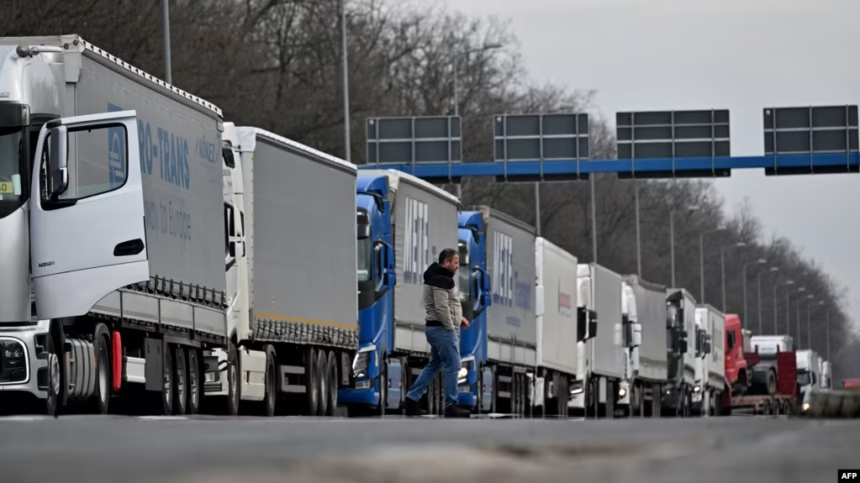
The Association of Transporters of Montenegro announced on Thursday that it has decided to end the blockade of goods traffic at border crossings with the European Union, a move that had also significantly affected businesses in Kosovo.
According to the association, following a meeting with representatives of the Montenegrin government, solutions were reached for a considerable number of their demands, prompting the withdrawal of trucks from border crossings, Montenegro’s public broadcaster RTCG reported.
Partial Solutions Reached, Fuel Excise Remains Unresolved
After the meeting, transport representatives stated that:
- VAT refunds are now being processed within the legally prescribed deadlines
- Guarantees were provided that the transit period for imported goods from Montenegro will be extended to 72 hours
- A proposal for preferential recognition of work experience will be submitted to the government for approval
However, the issue of fuel excise duties remains unresolved, the association emphasized.
“We have received assurances that all key issues with European partners, including ETIAS and fuel excise duties, will be discussed with the aim of stimulating our sector,” the transporters said, adding that the working hours of phytosanitary inspectors will be extended.
Widespread Border Blockades Across the Region
The International Road Freight Transport Association of Montenegro had blocked goods crossings at nine border points, including Debeli Brijeg, Ilino Brdo, Vraćenovići, Ranče, Metaljka, Dobrakovo, Dračenovac, Kula and Božaj, as well as entry and exit points at the Port of Bar.
During the protests, passenger vehicles and trucks carrying medicines, animals, explosives and weapons were allowed to pass.
Transporters from Montenegro, Serbia, North Macedonia and Bosnia and Herzegovina began blocking several border crossings on January 26, halting the flow of goods toward the EU’s Schengen Area.
Dispute Over Schengen Rules and Financial Burdens
The protesters are demanding changes to Schengen regulations that limit citizens of third countries to a stay of only 90 days within a 180-day period, arguing that this restriction severely hampers the work of professional drivers.
The European Commission has previously stated that it is working on a solution that would allow professional transporters to remain longer in the Schengen Area.
Montenegrin transporters also protested over:
- Low fuel excise reimbursements compared to regional peers
- Extremely slow VAT refunds, which in some cases have taken years
- Limited working hours of customs and phytosanitary inspections
Kosovo Businesses Feel the Impact
Although Kosovo did not take part in the protests, its economy has felt the consequences, as the country conducts most of its imports and exports through transit routes across neighboring states.
Several Kosovar businesses reported delays, financial losses and risks to existing contracts.
Ramiz Gashi, director of the company Relux, told Radio Free Europe/Radio Liberty that shipments of his company’s products to the United Kingdom were delayed, putting a major buyer at risk.
Similarly, Ruzhdi Rexhaj of Kalaja Epox warned that a shipment of epoxy resins from Austria, already paid for and loaded, could be delayed or fail entirely, jeopardizing ongoing projects.
In response, the Kosovo Chamber of Commerce and Industry sent a letter to European Commission President Ursula von der Leyen, warning that a week-long blockade could lead to further economic damage, including the loss of contracts with European partners.