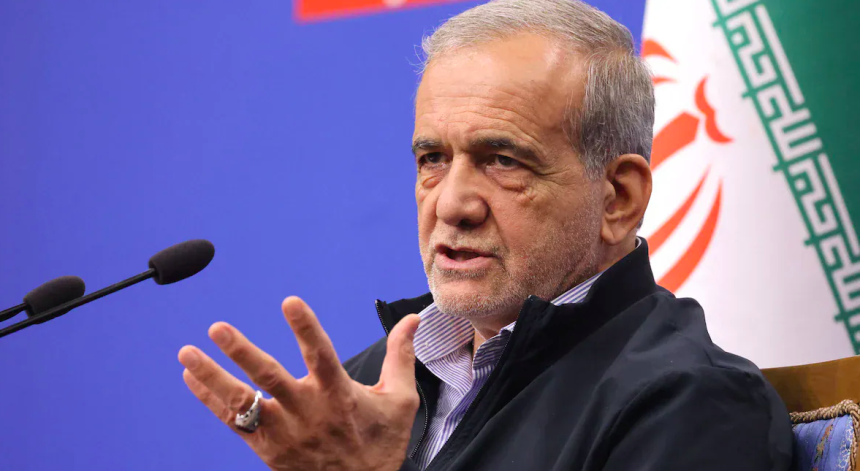
Iranian President Masoud Pezeshkian has accused U.S., Israeli and European leaders of exploiting Iran’s economic hardships and deliberately inciting unrest during the country’s recent nationwide protests.
Speaking during a live state television broadcast on Saturday, Pezeshkian claimed that foreign leaders provided resources and encouragement aimed at “dividing the nation”, while drawing ordinary citizens into what he described as a coordinated destabilization effort.
Deadly Crackdown on Protests
The protests, which erupted in late December amid a deepening economic crisis marked by soaring inflation and rising living costs, were violently suppressed by Iran’s clerical authorities.
According to HRANA, a U.S.-based human rights group, at least 6,563 people were killed over two weeks, including 6,170 protesters and 214 security personnel.
Iran’s Foreign Minister Abbas Araqchi presented different figures, stating that 3,100 people died, including 2,000 security officers, highlighting sharp discrepancies in official casualty reports.
Direct Accusations Against Western and Israeli Leaders
“American, Israeli and European leaders sought to provoke unrest, create divisions and supply resources, drawing some innocent people into this movement,” Pezeshkian said.
He specifically named U.S. President Donald Trump, Israeli Prime Minister Benjamin Netanyahu and European governments, accusing them of actively attempting to fragment Iranian society.
“They climbed onto our problems, provoked tensions and sought—and still seek—to tear this society apart,” he said. “Everyone knows this was not merely a social protest.”
Rising Regional and International Tensions
President Trump has repeatedly voiced support for Iranian demonstrators, warning that the United States could take action if Iran continued killing protesters. U.S. officials said on Friday that Trump is reviewing his options, though no decision has yet been made on potential military action.
According to Israeli outlet Ynet, a U.S. Navy warship docked Friday at the Israeli port of Eilat, further raising regional tensions.
Diplomatic Efforts to Avoid Escalation
Regional allies, including Turkey, the United Arab Emirates and Saudi Arabia, have reportedly engaged in diplomatic efforts to prevent a military confrontation between Washington and Tehran.
The United States has renewed demands that Iran curb its nuclear missile program if negotiations resume, a condition Tehran has firmly rejected.