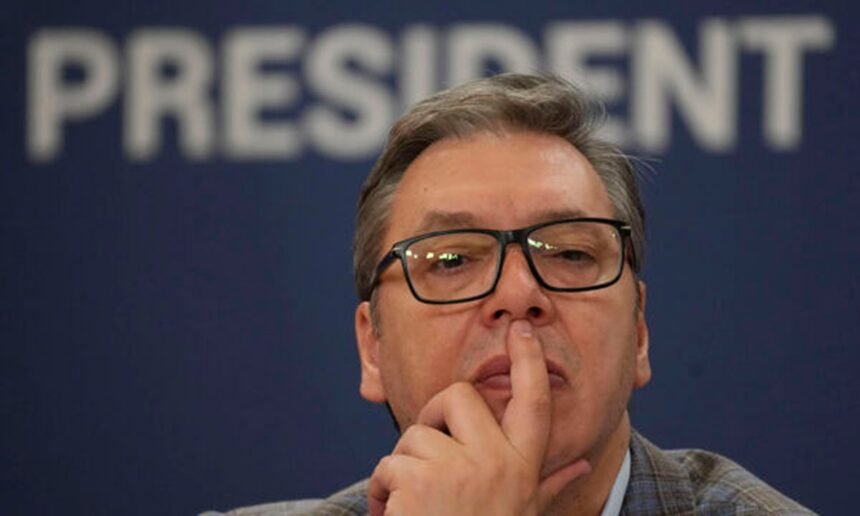
On the same day that Serbian President Aleksandar Vučić signed the controversial “Mrdić Laws” affecting the judiciary, he also inaugurated the Operational Team for Serbia’s EU Integration, which held its first meeting. The move appears intended to signal ongoing commitment to the EU accession process, despite the anti-European nature of the new laws.
The EU Commissioner for Enlargement, Marta Kos, recently expressed confusion over the Serbian government’s adoption of the legislation, emphasizing its clear misalignment with European standards. Experts argue that Vučić’s signature on the laws effectively signals a complete abandonment of Serbia’s EU path.
Expert Opinions:
- Sofija Popović, journalist at Savremena Politika, stated that no operational teams can mitigate the impact of the laws. The Serbian government has shown it is willing to sacrifice EU progress to maintain control over the Special Prosecution for Organized Crime. She highlighted that the EU’s warnings regarding judicial independence and procedural transparency were ignored. As a result, further progress in opening new negotiation chapters is unlikely.
- Duško Lopandić, former diplomat and vice president of Serbia Centre – SRCE, described the Operational Team as cosmetic, noting that it lacks key figures like the Prime Minister or Foreign Minister and primarily functions to create an appearance of progress for Brussels and Vučić’s domestic audience. Lopandić criticized the team’s structure, noting that Vučić personally requires reports, reinforcing his ego and centralized control. He argued that Serbia’s stagnation in EU negotiations stems from misalignment with EU foreign policy, particularly regarding sanctions on Russia, and the systematic capture of institutions.
Both experts agreed that the operational team has no real impact on Serbia’s EU accession, which remains stalled under the current government.
Following the first meeting, the Serbian government issued a statement outlining the ministers and officials present and describing discussions on priorities, methodology, and plans to fulfill obligations in the EU negotiation process—but without providing concrete outcomes.