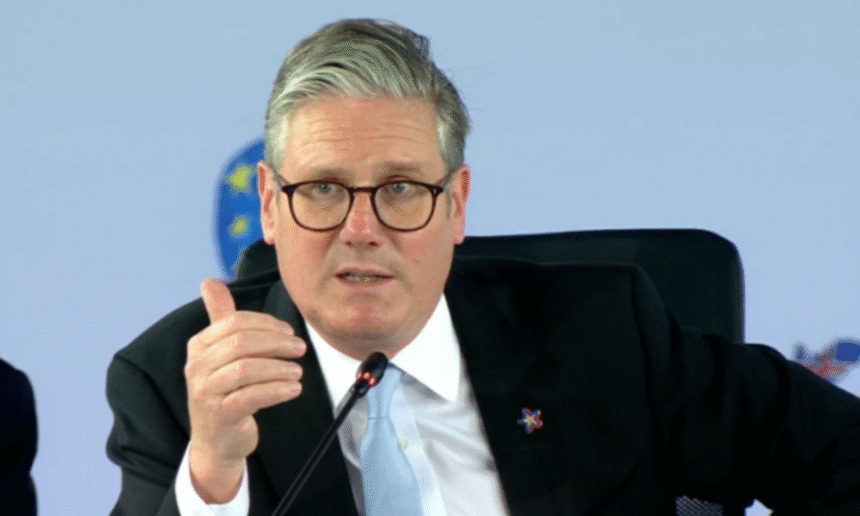
U.K. Prime Minister Keir Starmer has signaled a renewed effort to strengthen defense cooperation with the European Union, following the collapse of talks last year on Britain’s participation in the EU’s Security Action for Europe (SAFE) loan program.
Speaking during an official visit to China, Starmer said he hopes to make progress on defense spending, military capabilities, and broader cooperation between the U.K. and European countries, either through SAFE or alternative frameworks.
“We should look at schemes like SAFE and others to see whether there is a way in which we can work more closely together,” Starmer told reporters traveling with him to Beijing.
SAFE Talks Failed Over Financial Dispute
Negotiations for the U.K. to join the EU’s defense procurement loan initiative collapsed in November, reportedly due to disagreements over how much Britain would be required to contribute financially.
The failure has caused frustration among Labour figures and European allies, who view closer defense ties as a test of whether post-Brexit cooperation between London and Brussels can deepen.
For now, the U.K. can access SAFE only as a third country, meaning it does not enjoy the full participation rights originally envisioned.
EU Rejects Speculation on New SAFE Fund
Although EU Ambassador to the U.K. Pedro Serrano and British officials previously suggested another round of SAFE could include Britain, the European Commission has poured cold water on such expectations.
A Commission spokesperson stated clearly:
“We will not speculate on a possible second SAFE fund at this stage.”
Ukraine Support as an Alternative Path
Another possible route for closer cooperation involves the EU’s €90 billion loan program for Ukraine, which several member states — including the Netherlands — believe the U.K. should join.
However, France and other EU countries have proposed that non-EU participants should pay a contribution fee, arguing it would be unfair for third countries to avoid costs borne by EU member states.
British officials insist this proposal is not currently under active discussion.
A U.K. government spokesperson emphasized that Britain has already committed £21.8 billion in military and financial support for Ukraine.
High-Level EU–U.K. Talks Resume
This week, European Commissioners Maroš Šefčovič and Valdis Dombrovskis are visiting London for meetings with British ministers, ahead of a second EU–U.K. summit planned later this year. Their discussions are expected to focus primarily on trade, though defense remains a strategic backdrop.
As he departed China, Starmer reaffirmed his ambition to move beyond current levels of EU alignment, highlighting not only defense and security, but also energy cooperation, emissions policy, and trade.
Referring to the upcoming summit, Starmer added:
“We will not only follow up on the 10 strands set out at last year’s summit, but also move closer through an iterative process.”