Leaders of Europe’s dominant center-right political force, the European People’s Party (EPP), are pushing for the European Union to more actively use its mutual defense clause, reflecting growing alarm over former U.S. President Donald Trump’s wavering commitment to NATO and transatlantic security.
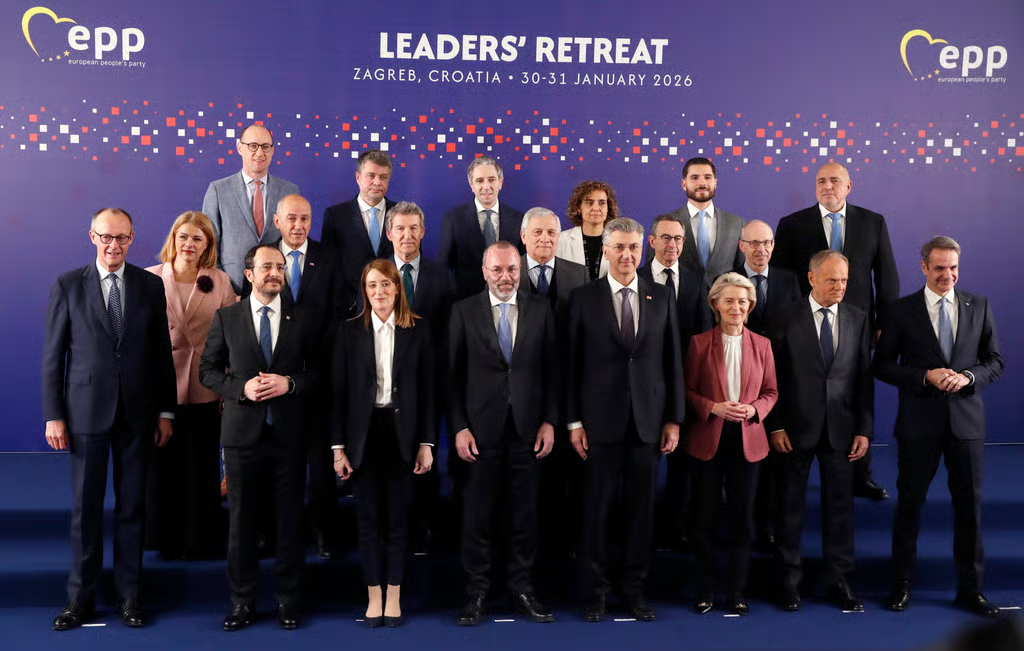
The initiative was discussed during a closed-door dinner at the EPP Leaders’ Retreat in Zagreb, attended by key figures including German Chancellor Friedrich Merz and European Commission President Ursula von der Leyen, according to reports cited by Brussels Playbook.
The EPP leadership has agreed to assign two yet-to-be-named EU heads of state or government with the task of examining how Article 42.7 of the EU Treaty could be operationalized. The clause obliges EU member states to provide “aid and assistance by all the means in their power” in the event that one member is attacked.
While no concrete timeline or implementation framework has been announced, the move signals a strategic shift toward greater European defense autonomy, driven by uncertainty over Washington’s reliability.
A policy paper released by the EPP on Sunday outlines nine critical areas where the EU must urgently build military capacity in order to reduce dependence on the United States. These include drones, space-based capabilities, and missile defense systems. Despite this push, the document still acknowledges NATO as the cornerstone of European defense, underscoring internal tensions between autonomy and alliance loyalty.
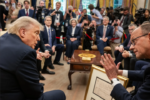
The renewed focus on the EU’s defense mechanisms comes amid what many observers describe as the most severe transatlantic crisis in decades, exacerbated by Trump’s claims over Greenland, which have shaken confidence in America’s long-term commitment to NATO’s collective defense principle.
Speaking at a press conference in Zagreb, EPP President Manfred Weber publicly endorsed French President Emmanuel Macron’s proposal to extend France’s nuclear deterrence to other EU member states.
“In light of the new developments in the United States,” Weber stated, “I fully support European leaders considering how France’s nuclear capability could be used to strengthen European security.”
The remarks reflect a growing consensus within Europe’s conservative leadership that the EU must prepare for a future in which U.S. security guarantees can no longer be taken for granted.