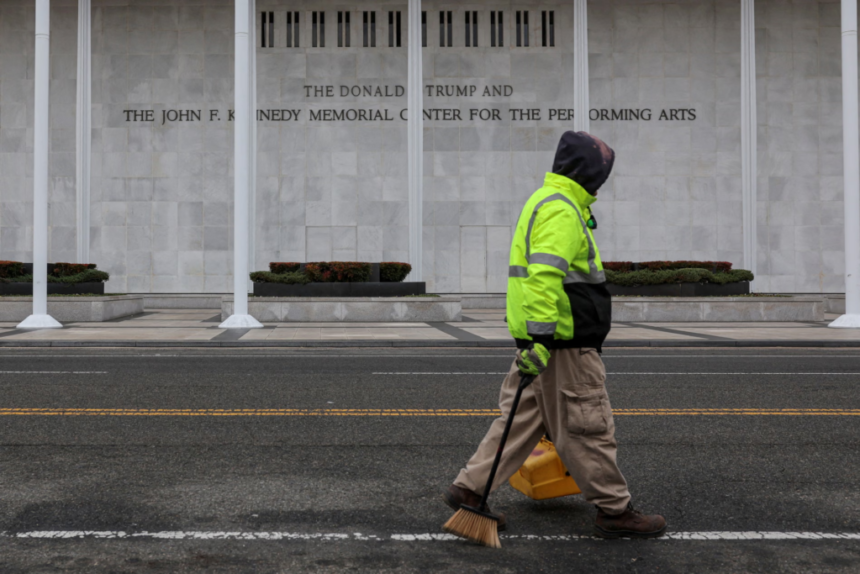
The John F. Kennedy Center for the Performing Arts, one of the most prestigious cultural institutions in the United States, will suspend all artistic activities for two years starting July 4, following a decision announced by U.S. President Donald Trump on his social media platform, Truth Social.
The closure comes after a period of institutional turmoil, mass cancellations, and record-low ticket sales, which began after Trump assumed control of the Kennedy Center in February 2025, replaced its governing board, and appointed himself as chairman.
A Politicized Takeover and Cultural Decline
Since the leadership change, the Kennedy Center — historically hosting more than 2,000 events annually — has seen a sharp withdrawal of prominent artists and cultural leaders. Among those who have cut ties with the institution are “Hamilton” producer Jeffrey Seller, actress Issa Rae, musician Rhiannon Giddens, and the band Low Cut Connie.
In addition, Shonda Rhimes, Renée Fleming, and Ben Folds have resigned from the board and artistic advisory roles, signaling what critics describe as a collapse of artistic confidence following political interference.
Trump Promises ‘Greatness’ Amid Empty Seats
In his statement, Trump claimed he had spent a year reviewing renovation options and concluded that a temporary shutdown was the fastest way to restore the center to “the highest level of success and grandeur.” He promised a “magnificent rebuilding” that would surpass all previous efforts.
However, a Washington Post analysis revealed that 43% of tickets for regular performances went unsold last year, highlighting a severe erosion of public engagement since the leadership overhaul. The Washington National Opera has also announced it will relocate its performances after more than four decades at the Kennedy Center.
Controversial Rebranding Push
The Trump-appointed board voted to rebrand the institution as the “Trump–Kennedy Center,” a move widely criticized as an attempt to politicize a national cultural landmark. Legally, the venue still retains its original name, as any official renaming requires approval by the U.S. Congress.
A Cultural Institution in Limbo
Once considered a pillar of American cultural diplomacy and artistic freedom, the Kennedy Center now faces an uncertain future. Critics warn that the shutdown reflects broader concerns about political control over independent cultural institutions, while supporters argue it represents a necessary reset.
As the two-year closure approaches, the fate of the Kennedy Center stands as a symbol of the deepening intersection between politics and culture in the United States.