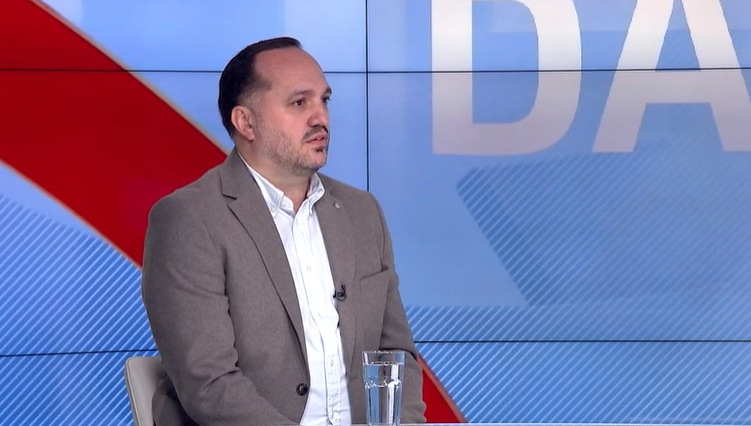
Dejan Pavlović, a professor at the Faculty of Political Sciences (FPN), has characterized the adoption of the so-called “Mrdić’s laws” as one of the most significant political fouls committed by the current Serbian administration in recent years. In an interview with N1, Pavlović argued that the severity of this attack on judicial independence and prosecutorial autonomy warranted either an opposition walkout from Parliament or a nationwide call to protest.
President Vučić “Exposed” by Investigations
Pavlović described President Aleksandar Vučić’s decision to sign these laws as a forced move, driven by a need to shield the administration from mounting legal scrutiny. He suggested that the President feels increasingly exposed as the Prosecution for Organized Crime (TOK) and other judicial bodies signal a readiness to finally unravel major corruption scandals that have plagued the country for over 15 years.
“He clearly could not allow certain things ‘rolling under the hill’ to happen. He feels exposed… we are finally seeing major scandals being untangled in a highly criminalized state,” Pavlović noted.
A Return to the 1990s Atmosphere
The professor drew grim parallels between current events and the 1990s. While Serbia is not experiencing hyperinflation, Pavlović highlighted a public discourse now dominated by drugs, murders, bombs, and gang confrontations. He also criticized the internal dynamics of the government, describing the Prime Minister’s silence as a “total defeat” and claiming the President treats his ministers with utter disregard.
Skepticism Toward Judicial Mass Mobilization
Despite ongoing protests by employees of the Prosecution for Organized Crime, Pavlović warned against expecting a mass uprising from the entire judiciary. He pointed out:
- Loyalty to the Regime: Many judges and prosecutors remain “authentic loyalists” to the President.
- Corruption Concerns: Pavlović alleged that some members of the judiciary have “butter on their heads,” citing databases that track the sudden wealth of judges and instances where investigations were intentionally dropped.
The Role of “Generation Z” and Future Elections
Looking ahead to future elections, Pavlović noted that Vučić’s core support remains with the 65+ demographic, while he has effectively lost the youth.
- Generation Z: This demographic “does not tolerate obvious lies” and cannot be manipulated via social media.
- The “Lukashenko vs. Orban” Scenarios: Pavlović predicts that if Vučić loses, he will face two paths: attempting to return later as an opposition leader (the “Orban model”) or attempting a total crackdown on dissent (the “Lukashenko model”). However, Pavlović doubts the latter is possible, noting that Vučić lacks a “big brother” like Russia to support such a regime.