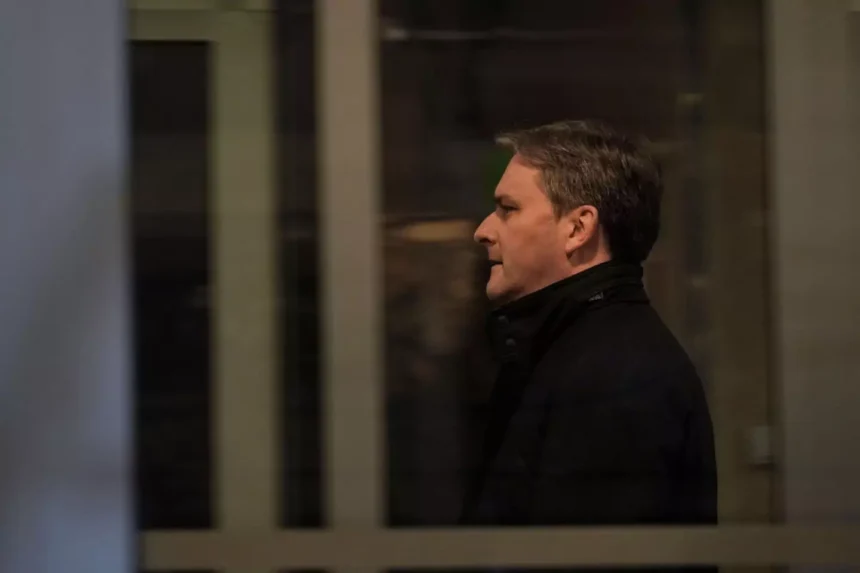
Serbia’s Minister of Culture, Nikola Selaković, is scheduled to appear in court tomorrow, becoming the first sitting Serbian minister to stand trial since the October 2000 political changes, in connection with the controversial “General Staff” redevelopment case, according to reports by N1.
The case concerns allegations that Selaković was involved in abuse of office and document falsification related to the removal of cultural heritage protection from the historic General Staff complex in central Belgrade.
Controversial Redevelopment Plans
Nearly 25 years after the NATO bombing that destroyed the General Staff building, Serbian authorities revealed in 2024 that several companies were interested in constructing new developments at the site.
Former Construction Minister Goran Vesić stated at the time that the government did not intend to allow the ruins to remain for another quarter-century.
Later that year, while public attention was focused on another major tragedy that claimed 16 lives, the Serbian government quietly approved a decision to remove the site’s protected cultural heritage status, according to media reports.
The move reportedly followed plans by a company linked to the son-in-law of U.S. President Donald Trump to build a luxury hotel complex at the location.
Cultural heritage experts warned that such actions could undermine Serbia’s Law on Cultural Heritage, suggesting that any protected site could potentially lose its status without proper justification.
Forgery Allegations and Arrests
Under Serbian law, the removal of cultural protection requires approval from the Institute for the Protection of Monuments. Prosecutors allege that Institute director Goran Vasić falsified documentation authorizing the removal, leading to his arrest under orders from the Organized Crime Prosecutor’s Office.
Public opposition grew, with students, experts, and civil groups demanding the reversal of the government’s decision. Despite protests, Serbian lawmakers later adopted special legislation accelerating procedures for the demolition and redevelopment of the complex.
Charges Against Selaković
The Organized Crime Prosecutor’s Office has formally charged Selaković with abuse of official position and document falsification connected to the removal of the site’s protected status.
Reports indicate that Selaković initially failed to attend scheduled hearings, later appearing before authorities under tense circumstances.
Political Pressure Allegations
The case has sparked controversy after Serbia’s government initiated legislative changes that would reduce the independence of the Organized Crime Prosecutor’s Office.
Serbian President Aleksandar Vučić has also publicly criticized prosecutors, accusing them of acting with arrogance and excessive authority, while stating that reforms were needed to ensure accountability.
Additionally, Vučić suggested he could use presidential pardon powers, raising questions among critics about the potential outcome of legal proceedings.
Broader Investigation Expected
Journalist Nataša Latković of Nova.rs stated that investigations may extend beyond Selaković, pointing to alleged concerns surrounding contracts with foreign investors and the potential involvement of companies based in the United Arab Emirates.
The case has fueled debate about rule of law, government transparency, and the protection of cultural heritage in Serbia, as Selaković prepares to face trial in what could become a landmark legal and political case.