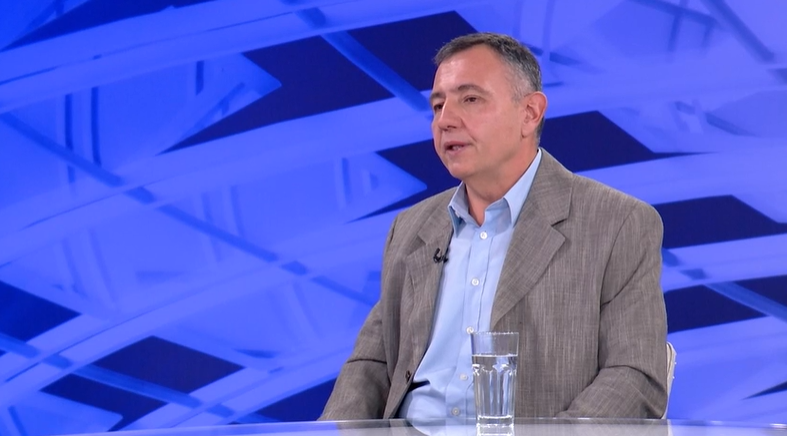
Serbian President Aleksandar Vučić is reportedly considering leaving the country, but experts warn that any serious crackdown on dissent could irreversibly damage his domestic and international standing. Historian and political analyst Dragomir Anđelković said Vučić is increasingly relying on fear and political manipulation to maintain control, while preparing contingency plans for a gradual exit.
According to Anđelković, recent judicial reforms and controversial legal changes, often referred to as the “Mrdić laws,” appear designed less for governance than as leverage against the EU, opposition, and citizens. “Vučić is raising the stakes,” Anđelković said, “while keeping the population under pressure and the political elite loyal through threats of prosecution.”
The analyst highlighted that Vučić has replaced loyalists with officials who fear imprisonment should his regime fall, creating a government based on intimidation rather than competence. Despite this, Anđelković warns that mass repression would be politically and operationally risky, recalling the public uprisings in Armenia in 2018 as a cautionary parallel.
“Vučić governs through fear, but his mechanisms of control are fragile,” said Anđelković. “The moment large-scale protests emerge with clear leadership, his hold on power could collapse. Many of his external options would be closed if serious blood were shed, and his capital is far from secure.”
The analyst also questioned the legitimacy of upcoming elections, predicting that any attempt by Vučić to manipulate outcomes will be increasingly difficult due to public distrust and a mobilized opposition. He believes that elections will likely be postponed until 2027, with Vučić potentially proposing a transitional government to safeguard his interests.
Anđelković drew comparisons not with Belarus, but with Armenia, noting that Vučić lacks the public support that allowed long-standing autocrats to maintain power. He emphasized that Vučić’s political survival depends on external backing and strategic maneuvering, yet warned that his reliance on fear and repression makes the regime inherently unstable.
This analysis portrays a president increasingly isolated both domestically and internationally, clinging to power through intimidation, legal manipulation, and political theatrics. Analysts suggest that without transparent governance and genuine reforms, Vučić’s grip on Serbia may prove unsustainable.