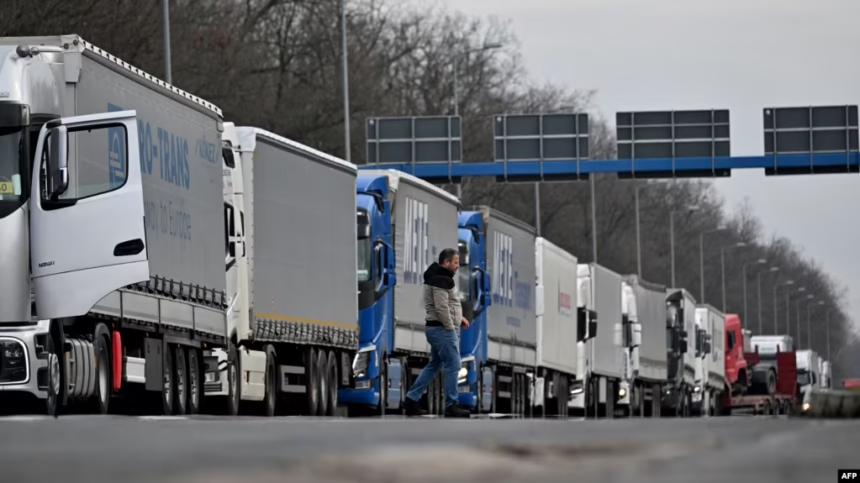
The European Commission has agreed with Western Balkan partners to continue discussions at a technical level regarding ongoing problems faced by truck drivers at Schengen Zone borders.
The decision to establish a technical working group followed a meeting between regional ministers and representatives of the European Commission held on February 3 in an online format.
“The aim of the meeting was to ensure a clear understanding of how the Entry/Exit System (EES) operates and to discuss measures to mitigate potential negative impacts,” said European Commission spokesperson Markus Lammert.
He added that the Commission is aware of the concerns raised by transport operators from the Western Balkans, is closely monitoring the situation, and remains in regular contact with regional partners.
The meeting came after transport companies from four Western Balkan countries launched a border blockade on January 26, protesting the implementation of the new Schengen Entry/Exit System.
The European Entry/Exit System (EES) is an automated IT system designed to replace manual passport stamping for non-EU citizens entering the Schengen Area. The system records biometric data, including fingerprints and facial images, as well as traveler identification details and travel dates. Its primary goals are to strengthen border security, detect visa overstays, and prevent identity fraud.
The EES was partially introduced in October 2025, with full implementation expected by April 2026.
Although the European Commission has pledged to seek solutions, the new visa strategy adopted on January 29 does not include specific measures addressing truck drivers’ concerns. Instead, it confirms that the issue will be reviewed in future discussions.
The document states that the Commission will work closely with EU member states to find “pragmatic solutions” for adjusting extended short-term stays for selected categories of third-country nationals, while ensuring security and economic benefits for the EU and maintaining legal certainty for travelers.