The last remaining nuclear arms control treaty between the United States and Russia, the New START Treaty, is set to expire on Thursday, ending more than 50 years of bilateral limits on the world’s two largest nuclear arsenals. Its expiration removes caps on deployed nuclear warheads and delivery systems, raising fears of a renewed and potentially unconstrained arms race.
Russian President Vladimir Putin has offered to abide by the treaty limits for an additional year if the U.S. agrees, but President Donald Trump has not committed to an extension. While Trump has expressed interest in limiting nuclear weapons and involving China in future arms control talks, Beijing has rejected restrictions on its growing arsenal.
Experts warn that the absence of treaty constraints could incentivize both Russia and the U.S.—and potentially China—to expand deployed nuclear forces, increasing global instability and the risk of nuclear conflict.
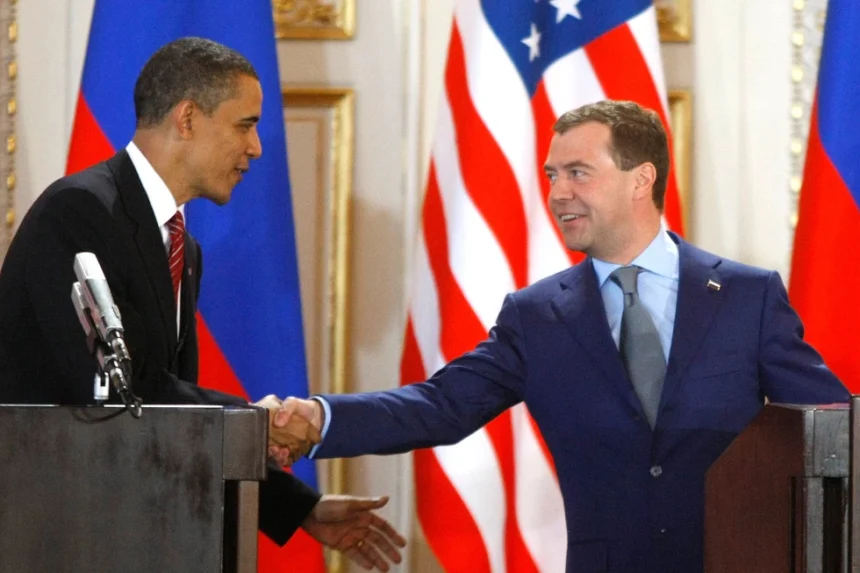
Signed in 2010 by Presidents Barack Obama and Dmitry Medvedev, New START limited each side to 1,550 warheads on no more than 700 deployed missiles and bombers, with verification via on-site inspections. Inspections halted in 2020 due to COVID-19, and Russia suspended participation in 2023, citing concerns over U.S. intentions in Ukraine, though it has pledged to respect the warhead cap.
New START was the latest in a series of arms reduction agreements, including SALT I (1972), the ABM Treaty (1972–2001), and the INF Treaty (1987–2019). Its expiration comes amid rising tensions, ongoing Russian nuclear modernization, and U.S. proposals like the Golden Dome missile defense system, which Moscow and Beijing view as destabilizing.
Arms control advocates warn that the expiry of New START could mark a “turning point into a much more dangerous period of global nuclear competition,” with accelerating strategic rivalry among the U.S., Russia, and China.