The United States Congress has approved $200 million in security assistance for the Baltic states amid increased Russian activity on NATO’s eastern flank.
The funds, approved this week as part of the 2026 fiscal year budget, provide support for Estonia, Latvia, and Lithuania under the Baltic Security Initiative.
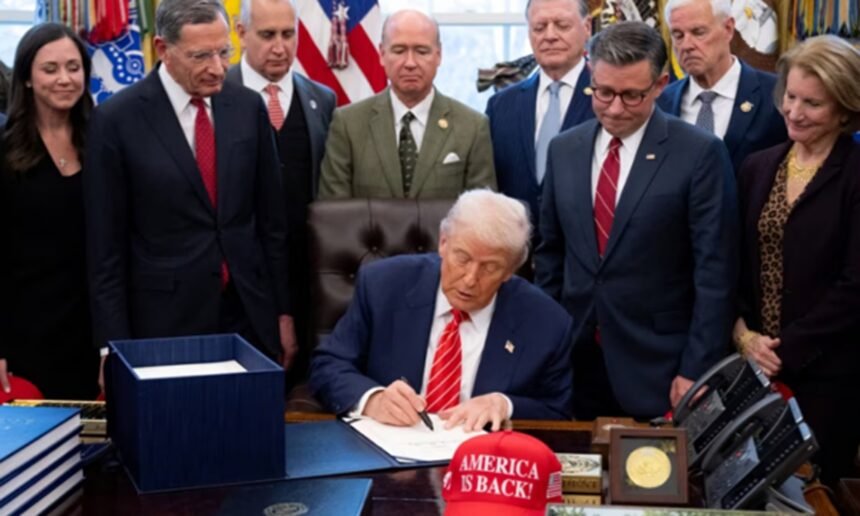
The $838.7 million package, signed by U.S. President Donald Trump on February 3, aims to enhance cooperation with the three Baltic countries, despite past Pentagon efforts to reduce the program.
An additional $10 million has been allocated to Estonia from the foreign military financing program, which Tallinn previously used to purchase HIMARS systems, Javelin missiles, and large-caliber artillery shells.
“This is very good deterrence for our Baltic allies,” said Congressman Don Bacon in an interview with Radio Free Europe/Radio Liberty.
He noted that this issue became a priority after the U.S. Department of Defense signaled a potential halt to funding.
“Congress is committed to a strong NATO alliance, and we know the Baltics require greater attention,” he said, adding that history proves the risk posed by abandoning global commitments.
“Most in Congress are committed to NATO, and we know we need allies to confront China, Russia, and Iran. We cannot do it alone. America alone is a weakened America,” Bacon emphasized.
All three Baltic states, NATO members and supporters of Ukraine, have faced violations of their territorial airspace by Russian aircraft and drones in recent months.
Bacon added that Russia’s war against Ukraine, now entering its fifth year, poses a threat beyond Ukraine’s borders. He warned that how this conflict concludes—the bloodiest in Europe since World War II—will shape the security environment for the Baltic states and other vulnerable neighbors.
“If Ukraine loses, we must understand that Moldova will be next,” he said.
“We cannot remain neutral. We must stand for freedom and against a dictatorial aggressor.”
For the Baltic states, the approval of funds goes beyond budgetary decisions.
Lithuanian Foreign Minister Kestutis Budrys told Radio Free Europe/Radio Liberty on February 4 that the decision confirms the region as NATO’s frontline.
Budrys also highlighted other threats to the region, including Russian and Belarusian hybrid operations.
Kristen Taylor from the Transatlantic Security Initiative at the Atlantic Council told Radio Free Europe/Radio Liberty that the legislation was passed in response to the growing urgency due to Russian activity.
According to Taylor, the funding is intended to enhance the military capabilities of the Baltic allies.