Kosovo has entered a critical political countdown as lawmakers face a constitutional deadline to elect the country’s next president, a process that could determine whether the state maintains institutional stability or heads toward early elections.
Although Kosovo operates as a parliamentary democracy, the role of the president has consistently carried significant political weight, and the upcoming mandate is proving no exception. Political calculations surrounding the position are intensifying as the March 4 deadline for electing a new head of state rapidly approaches.
Osmani Seeks Second Term Amid Uncertain Support
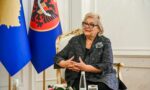
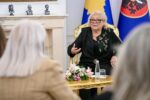
President Vjosa Osmani has openly expressed her intention to secure a second term, but it remains unclear whether she has sufficient parliamentary backing to remain in office. While Kosovo’s Central Election Commission has already announced final parliamentary election results, the new legislature has yet to be fully constituted, adding further uncertainty to the process.
Failure to elect a president by the constitutional deadline would automatically trigger new parliamentary elections, risking political paralysis at a time when the country faces urgent legislative and economic priorities.
Vetëvendosje’s Strategic Ambiguity Raises Concerns
For Vetëvendosje (LVV), which secured more than 51 percent of the vote in the December 28 snap parliamentary elections, the presidential election is reportedly considered its fourth political priority, according to party leader and acting Prime Minister Albin Kurti.
Kurti has confirmed discussions with Osmani but has notably avoided publicly endorsing her candidacy. Political analyst Dritëro Arifi argues that LVV is deliberately maintaining strategic ambiguity, possibly as a pressure tactic against opposition parties.
According to Arifi, Kurti appears reluctant to fully negotiate around Osmani’s candidacy, suggesting that trust between the two leaders may not be as strong as it was during her initial election in 2021.
“LVV is playing a calculated pressure game, allowing the deadline to approach in order to force the opposition into accepting whichever candidate is ultimately proposed,” Arifi told Radio Free Europe.
Opposition Parties Remain Divided and Non-Committal
Opposition parties have also refrained from presenting a unified position, highlighting the broader political fragmentation.
Democratic Party of Kosovo (PDK) leader Bedri Hamza has stated that the parliament must first be constituted before serious negotiations on a presidential candidate can begin.
Meanwhile, Democratic League of Kosovo (LDK) leader Lumir Abdixhiku has expressed willingness to engage in cross-party dialogue, emphasizing that the presidency must symbolize national unity rather than partisan compromise.
The LDK previously played a decisive role in enabling Osmani’s election in 2021 by providing the necessary quorum.
The Alliance for the Future of Kosovo (AAK) has indicated it may propose its own candidate, with party officials suggesting that leader Ramush Haradinaj could emerge as a potential contender, further complicating efforts to reach consensus.
Minority Parties Signal Conditional Support
Representatives from non-majority communities have indicated they would likely support the candidate proposed by the parliamentary majority, with several minority lawmakers stating they would also be willing to vote for Osmani.
Complex Voting Requirements Increase Political Stakes
Kosovo’s constitution sets strict thresholds for electing a president:
- A candidate must secure at least 30 parliamentary signatures to be nominated.
- The president must receive two-thirds of parliamentary votes (80 out of 120 deputies) in the first two rounds.
- If unsuccessful, a simple majority of 61 votes is sufficient in the third round.
Risk of Institutional Paralysis and Economic Fallout
Political observers warn that failure to elect a president could trigger severe institutional and economic consequences. Beyond the likelihood of early elections, Kosovo could face a delayed state budget, disruption of public sector salaries, and the suspension of key international agreements, including funding tied to the European Union’s Growth Plan and cooperation with the World Bank.
Arifi stressed that new elections would occur only in what he described as “a scenario of complete collective political irrationality,” arguing that opposition parties may ultimately compromise to avoid national instability.
Concerns Over Presidential Neutrality Persist
During her current mandate, Osmani has faced repeated criticism from political opponents who accuse her of aligning too closely with Vetëvendosje, raising broader concerns about institutional independence.
In a recent interview, Osmani indicated that if she fails to secure re-election, she intends to remain politically active, although she declined to specify whether she would align with a particular party.
As the deadline approaches, Kosovo’s political leadership faces mounting pressure to reach consensus, with the outcome likely to shape not only the country’s domestic stability but also its international credibility and reform trajectory.