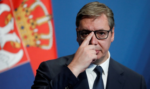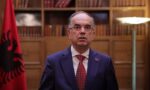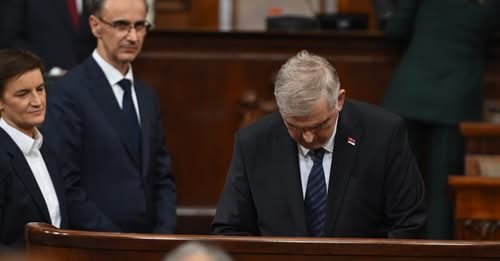
Serbia’s Minister for Human and Minority Rights, Demo Berisha, has claimed that the rights of ethnic Albanians in Serbia “have not been violated,” despite growing international scrutiny and longstanding complaints from Albanian representatives in southern Serbia regarding systemic discrimination.
Berisha made the remarks while responding to a request from U.S. lawmakers urging the U.S. State Department to investigate allegations of discrimination against Albanians living in Serbia, particularly in the Presheva Valley.
Dismissal of Discrimination Allegations Sparks Criticism
During an interview with pro-government television channel Pink, Berisha rejected claims of human rights violations, asserting that no one could convince him that Albanians in Serbia face discrimination.
He further claimed that Albanian political representatives in southern Serbia have refused to engage with him, stating that he has invited them to meetings five times without success. However, representatives of the Albanian minority have previously criticized Berisha’s appointment, arguing that he does not represent the interests of ethnic Albanians but rather serves Serbian government political objectives.
Persistent Complaints from the Presheva Valley
Ethnic Albanians living in the Presheva Valley — which includes the municipalities of Presheva, Medvegja, and Bujanovac — have repeatedly reported discriminatory practices by Serbian authorities. Officials from Kosovo have also echoed these concerns, highlighting issues related to political marginalization and limited institutional integration.
On January 21, members of the U.S. House Foreign Affairs Committee approved draft legislation requesting a comprehensive report on minority rights in Serbia, with particular focus on Albanians in southern Serbia. The proposed legislation calls for examination of several key concerns, including:
- Address “passivization,” a controversial administrative practice that removes residents from official registries
- Restrictions on the use of the Albanian language in public institutions
- Educational discrimination, including non-recognition of diplomas issued in Kosovo
- Shortages of Albanian-language school textbooks
Address Deregistration and Education Remain Major Disputes
Addressing the controversial issue of address passivization, Berisha stated that approximately 63,000 addresses have been deactivated across Serbia, insisting that the measure does not target Albanians specifically. Nevertheless, Albanian community leaders have consistently argued that the policy disproportionately affects their population, leading to loss of voting rights, social services, and residency status.
Regarding education, Berisha claimed that Serbia’s Ministry of Education has approved 68 textbooks in the Albanian language, alleging that the Albanian community has refused to endorse them. He further argued that textbooks proposed by Albanian representatives conflict with Serbia’s educational framework. Albanian leaders, however, continue to report severe shortages of appropriate learning materials, a gap partially addressed through financial support from Kosovo.
Unfulfilled Agreements and EU Integration Concerns
According to Serbia’s 2022 population census, more than 60,000 ethnic Albanians live in the country, making them the fourth-largest national minority. Despite this, three agreements reached between Serbian authorities and representatives of the Presheva Valley in 2001, 2007, and 2013 — all aimed at guaranteeing minority rights and improving integration — remain largely unimplemented.
The integration of ethnic Albanians into state institutions is also considered a key obligation for Serbia under its European Union accession negotiations. Analysts warn that failure to address minority rights concerns could further complicate Serbia’s EU membership prospects.
Observers and community representatives believe that persistent economic neglect, institutional barriers, and political marginalization have contributed to the migration of approximately 20,000 Albanians from the Presheva Valley, most relocating to Kosovo.
Growing International Attention
Berisha’s categorical dismissal of discrimination allegations comes at a time when international institutions are increasingly examining Serbia’s minority rights record, raising questions about the government’s commitment to democratic standards and minority protections required for EU integration.