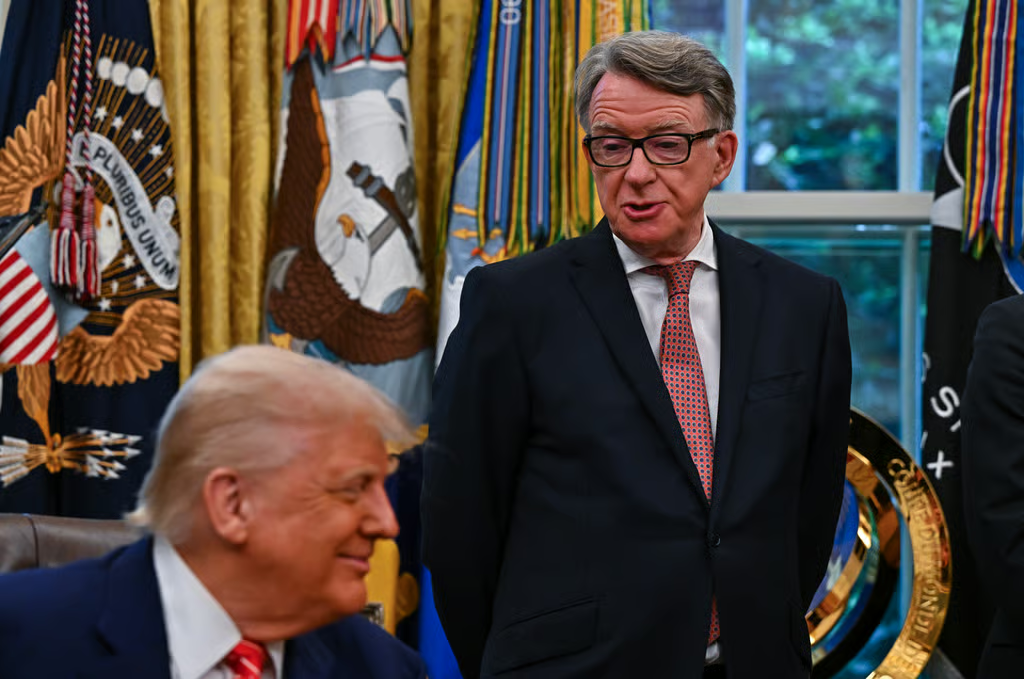
Senior U.K. officials have expressed concern that the impending release of documents from former British ambassador Peter Mandelson could seriously strain diplomatic relations with former U.S. President Donald Trump.
Mandelson, a prominent figure in the New Labour era and a controversial envoy, is known for documenting his thoughts in real time via emails and texts, rather than through official diplomatic cables alone. Officials fear that these communications, which will be reviewed by the Intelligence and Security Committee (ISC) before publication, could contain “damaging” commentary about Trump and his administration, as well as insights into internal U.K. decision-making.
Whitehall insiders told POLITICO that Mandelson’s candid style and history of unfiltered remarks make the files a potential source of embarrassment. One official noted: “He used to download his thoughts in real time. There is lots which could be damaging.”
The ISC has instructed that any documents relevant to national security must be disclosed unredacted, though the committee has limited scope to consider matters of political sensitivity. Kevan Jones, chair of the committee, indicated that the ISC intends to make “as much as possible in the public domain.”
Mandelson’s tenure as ambassador was marked by controversy. He was appointed despite past links to Jeffrey Epstein and subsequently forced to step down after revelations of continued contact with Epstein following the financier’s conviction. The situation is further complicated by ongoing police investigations into allegations of misconduct in public office, which may restrict what can be published.
Observers note parallels with former ambassador Kim Darroch, who resigned in 2019 after confidential cables criticizing Trump’s administration were leaked, highlighting the risks of candid diplomatic reporting becoming public.
In response to the unfolding situation, FCDO Permanent Secretary Oliver Robbins issued guidance to civil servants, urging them to refer all inquiries regarding the potential disclosures to his office and reassuring staff about the department’s commitment to professionalism and integrity.
The U.K. government now faces a delicate balancing act: maintaining transparency in response to parliamentary demands while managing the diplomatic sensitivities of potentially incendiary files that could impact relations with the U.S., a key strategic partner.