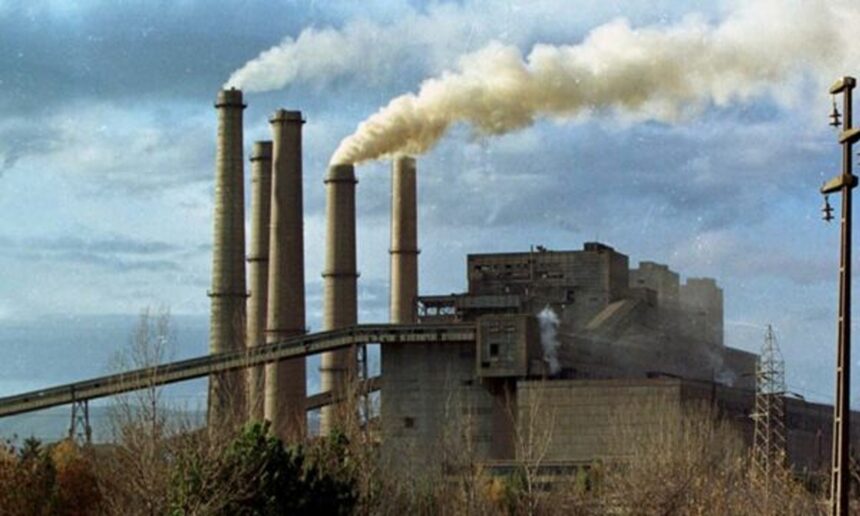
The Energy Regulatory Office (ERO/ZRRE) has raised concerns that the Kosovo Energy Corporation’s (KEK) planned investments in thermal power plants could jeopardize the security of electricity supply.
In March—when the energy system is still under significant load and supply security could be at risk—KEK plans to take Unit B2 of the Kosovo B Power Plant offline for 35 consecutive days.
ERO has deemed the timing of this investment unacceptable, given the existing system load and the parallel operation of “Termokos” to meet district heating needs.
KOHA has learned that ERO has requested the overhaul be postponed to May or another period, provided that electricity supply security is not compromised.
According to a draft plan for 2026 submitted by KEK to ERO, maintenance on Unit B2 is scheduled from March 4 to April 7.
Shutting down this unit would reduce Kosovo’s electricity production by approximately 300 megawatt-hours, in addition to a 140 megawatt-hour shortfall resulting from the outage of Unit A5 at the Kosovo A power plant, where investments are also planned from February 14 to May 5.
Sources told KOHA that ERO has asked the transmission system operator, KOSTT, to prepare the energy balance in line with the regulator’s assessment, regardless of whether KEK adjusts its maintenance schedule. ERO has emphasized that this is not an internal matter for KEK, but an issue of national interest.
Under KEK’s plans, Unit B1 of the Kosovo B Power Plant will also be out of operation for eight months. Investments are scheduled from April 8 to December 9, resulting in a production shortfall of around 250 megawatt-hours during that period.
The draft plan also foresees one-month repairs to Units A3 and A4 during June–July and August–September. In addition to these repairs, nine shutdowns for inspections are planned across four KEK units this year, each lasting up to 10 days.
KOHA sought comment from KEK regarding the planned investments, but the corporation did not respond on Thursday.
Energy expert Adhurim Haxhimusa said that KESCO should use the maintenance schedule to secure contracts in advance in order to obtain more favorable electricity prices.
“This could be used to secure advantageous long-term contracts for the period when these generation capacities are offline, at lower prices, so that citizens are not affected and the public interest is protected. If this does not happen, there is a risk of an increase not just of 20 percent, but even 30 percent,” he said.
Acting Minister of Economy Artane Rizvanolli said on Wednesday that KEK’s units need to be shut down for several months and that electricity imports will continue over the next two years.
Due to reduced domestic production as a result of interventions in the units, electricity imports have increased, prompting KESCO—through its application for maximum allowed revenues—to request an electricity price increase of over 21 percent.