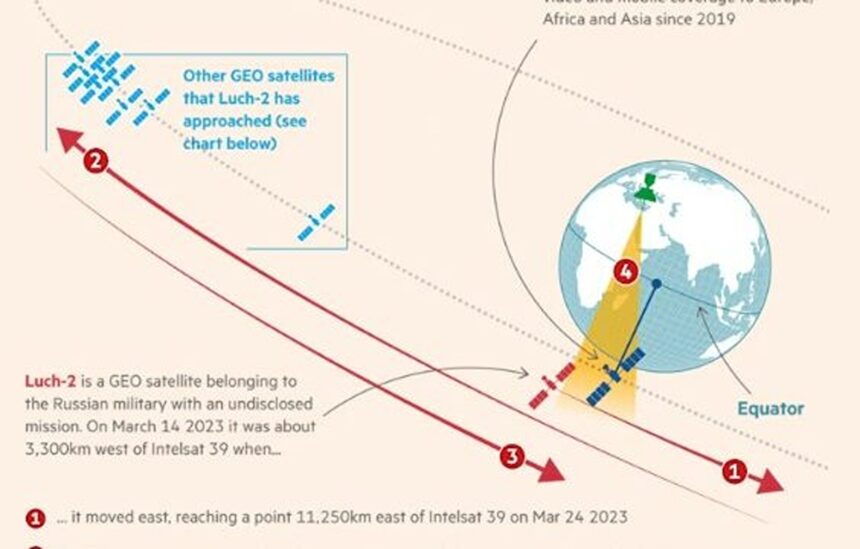
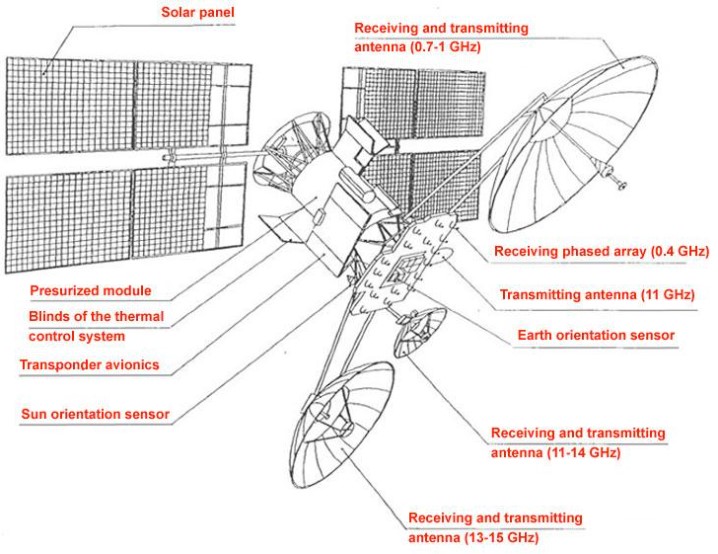
Two Russian space assets, known as Luch-1 and Luch-2, are suspected of monitoring communications from at least twelve critical European satellites, according to European security and intelligence officials who spoke to the Financial Times.
These suspected activities raise serious concerns, not only regarding the leakage of sensitive data, but also the possibility of Russia manipulating satellite movements or even causing technical malfunctions and collisions in orbit.
Western military and civilian space authorities have reportedly been monitoring these activities for several years, although they had not been made public until now.
The intensification of Russian activity coincides with escalating tensions between Moscow and the West following the invasion of Ukraine. Over the past three years, Russian satellites have closely followed European satellites in geostationary orbit, approximately 35,000 kilometers above Earth, which provide services to Europe, the United Kingdom, Africa, and the Middle East.
Maneuvers Near European Satellites
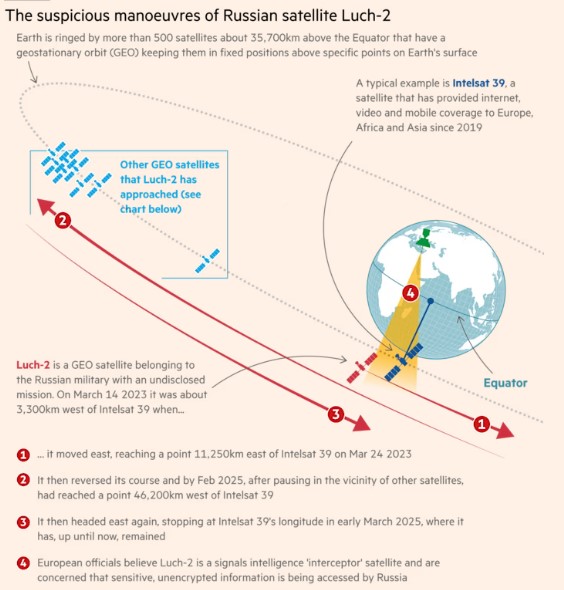
Reports indicate that Luch-1 and Luch-2 have repeatedly maneuvered close to European satellites, remaining near them for weeks or even months.
Since their launch in 2023, Luch-2 has approached at least 17 European satellites. Officials believe the primary objective of these movements is the collection of signal intelligence (SIGINT).
Michael Traut, head of Germany’s Space Command, told the Financial Times that the Russian satellites are suspected of operating within narrow transmission beams between ground stations and satellites. A senior European intelligence official noted that this could allow Russia to intercept communications, including satellite control data.
Vulnerabilities of Older Satellites
Many European satellites are considered vulnerable because they were launched years ago without modern encryption technology or advanced computer systems. Consequently, command links used to adjust orbits and positioning could be transmitted unencrypted. If intercepted, this information could later be used to interfere with satellite operations or even disable them.
Security experts link this activity to a broader pattern of Russian “hybrid warfare” in Europe, which also includes sabotage of undersea internet and power cables. Intelligence officials warn that such tactics could extend into space.
Risk of Satellite Manipulation
Analysts caution that with sufficient command and control data, Russia could impersonate legitimate ground operators and issue false commands. Such actions could divert satellites from their trajectories, deactivate them, or even force them to re-enter Earth’s atmosphere.
The satellites allegedly targeted are primarily civilian, such as those used for satellite television, but many also carry limited government and military communications. Even without decrypting messages, Russia could analyze satellite usage patterns, identify operators, and locate ground terminals, creating opportunities for targeted cyber or physical interference.
Increased Russian Activity in Space
According to monitoring companies, Luch-2 is currently operating near Intelsat 39, a key satellite serving Europe and Africa. Meanwhile, Russia appears to be expanding its space surveillance capabilities with newer satellites, including Cosmos 2589 and Cosmos 2590, which demonstrate similar maneuverability.
There are also concerns that Luch-1 may be non-operational following a possible propulsion system failure and partial fragmentation observed in January.
European officials consider Russian activity a serious and growing threat, highlighting modern society’s heavy dependence on satellite infrastructure, which remains highly sensitive to interference.