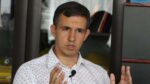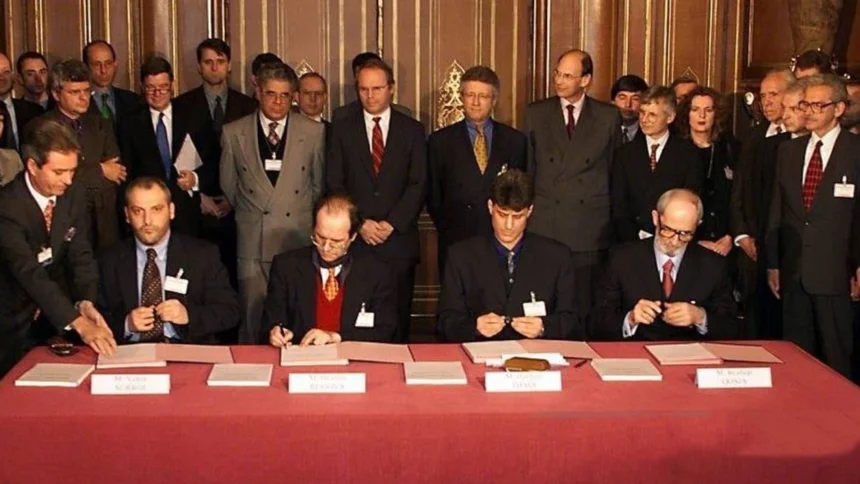
Former Kosovo Liberation Army (KLA) General Staff member Ramë Buja has revealed previously undisclosed details about the Rambouillet Conference, marking 27 years since the historic diplomatic event that shaped Kosovo’s future.
Speaking to KosovaPress, Buja described the February 1999 conference as a decisive turning point, offering insight into the military, diplomatic, and personal challenges faced by the Kosovar Albanian delegation during the negotiations in France.
A Strategic Move to Gain Time and International Support
Buja recalled that the KLA entered the Rambouillet process while facing severe shortages of ammunition and military resources, forcing leadership to seek both international recognition and time to strengthen resistance efforts.
He explained that the idea of an international conference first emerged in mid-1998, when European representatives approached KLA leadership to gauge readiness for negotiations. However, forming the delegation proved complicated, as it required balancing representatives from the battlefield, political leadership in Prishtina, and diaspora-linked figures.
According to Buja, the KLA leadership, including Hashim Thaçi, Jakup Krasniqi, Xhavit Haliti, Azem Syla, and himself, accepted participation despite difficult initial conditions. He emphasized that the delegation did not expect immediate major political victories, but rather aimed to extend resistance capabilities and internationalize Kosovo’s struggle.
The Unusual Request to Travel Armed
One of the most dramatic revelations involved the KLA delegation’s request to travel armed to Prishtina Airport, which was controlled by Serbian forces at the time. Buja said the request initially shocked American officials, including diplomat Shawn Byrnes.
He explained that the delegation insisted on carrying light weapons not for combat, but to avoid being captured alive by Serbian forces, stating they were prepared to take their own lives rather than surrender. After hearing their reasoning, American representatives reportedly approved the request.
From Battlefield Fighters to Diplomats Overnight
Buja also described the unexpected logistical challenges before departure, including the delegation’s urgent need for civilian clothing. Supporters helped supply suits and formal attire, while family members assisted with preparations, symbolizing the rapid transformation of KLA fighters into international political representatives.
The delegation was transported under heavy security, accompanied by U.S. armored vehicles and escorted by KLA special units through high-risk areas near the airport. Buja recalled emotional scenes as local residents gathered to send them off with hope and pride.
Meeting NATO’s Supreme Commander Wesley Clark
Buja shared details of a confidential meeting between the KLA delegation and NATO Supreme Allied Commander General Wesley Clark, describing it as a powerful moment that reinforced international military support for Kosovo.
According to Buja, Clark urged the delegation to allow NATO intervention, reportedly stating that he sought the opportunity to confront Slobodan Milošević militarily.
Linking Rambouillet to Current Hague Trials
Buja concluded by drawing parallels between the 1999 events and ongoing legal proceedings against former KLA leaders in The Hague. He argued that convicting former KLA commanders would undermine the historical legitimacy of NATO’s intervention and Kosovo’s liberation struggle, defending the KLA’s actions and calling for recognition of their sacrifices.
He stressed that international military intervention would not have occurred without the KLA’s resistance, framing the organization as central to Kosovo’s path toward freedom and independence.