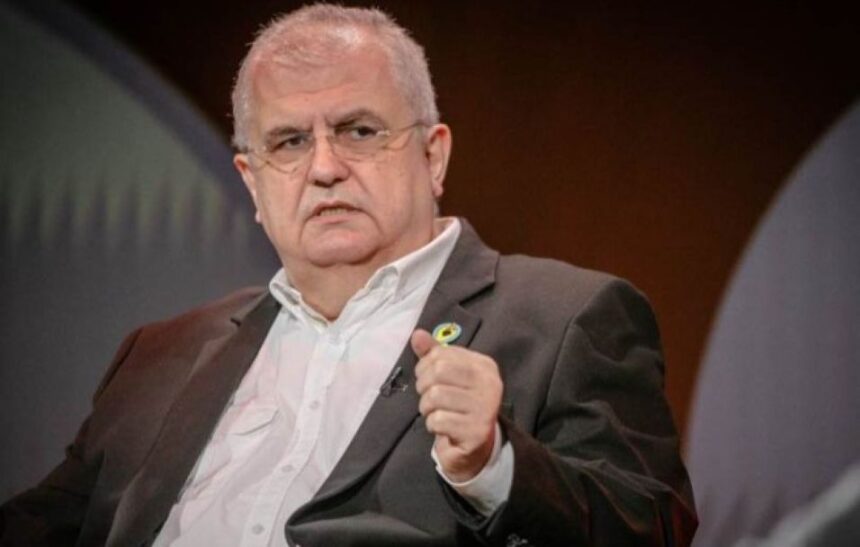
Serbian politician Nenad Čanak has stated that current internal challenges and political tensions within Serbia make a new military conflict with Kosovo highly unlikely, emphasizing the importance of continued international pressure and dialogue between the two sides.
Speaking to Euronews Albania, Čanak stressed that normalization of relations between Belgrade and Prishtina remains essential, while highlighting the decisive role of the United States and the European Union in maintaining regional stability.
Serbia “Does Not Have the Potential” for War
According to Čanak, Serbia currently lacks the necessary capacity to engage in an active military confrontation with Kosovo.
“I do not see a scenario where war between Serbia and Kosovo is possible, because Serbia does not have the potential to be actively engaged,” Čanak stated.
He pointed to Serbia’s internal political and economic challenges as key factors limiting any potential military escalation.
Allegations of Corruption and Russian Influence
Čanak also delivered strong criticism of the Serbian government, alleging that corruption remains deeply embedded within state institutions. He further claimed that certain government decisions are influenced by Russian intelligence networks.
He specifically named Serbian political figures Aleksandar Vulin and Nikola Popović, alleging they act as Kremlin-linked operatives within Serbia’s governing structures. Despite these claims, Čanak argued that the broader geopolitical tensions between Western and Eastern powers reduce the likelihood of open conflict, although provocations remain a realistic possibility.
US Role and Potential Kosovo-Serbia Resolution
Addressing reports about a potential United States resolution aimed at concluding the Kosovo-Serbia dialogue through mutual recognition, Čanak referenced political analyst Dušan Janjić, describing him as a well-informed source and suggesting that such claims should be taken seriously.
Čanak reiterated that international actors continue to push for acceptance of Kosovo’s sovereignty, asserting that Western powers increasingly expect Serbia to acknowledge Kosovo as an independent state with equal rights within the regional and global political framework.
The remarks come amid ongoing diplomatic efforts and periodic tensions between Belgrade and Prishtina, underscoring the fragile but sustained push toward normalization.