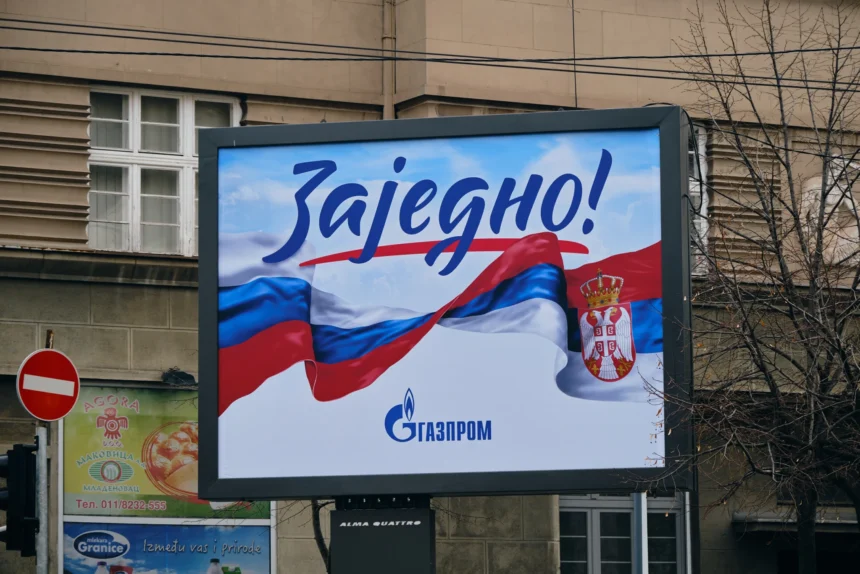
The potential sale of the majority stake in Naftna Industrija Srbije (NIS) has reignited questions about Serbia’s strategic and economic decision-making under President Aleksandar Vučić. Analysts warn that the current approach risks undermining national interests, leaving Serbia with a secondary role while foreign companies capture the lion’s share of value.
According to recent reports, Gaspromnjeft’s 56.15% stake in NIS is being negotiated with a joint venture of Hungarian MOL and UAE-based ADNOC for approximately €900 million, implying a total NIS valuation of around €1.6 billion. President Vučić claims he was willing to pay “double” for the shares but did not disclose details, citing protection of national interests.
Experts criticize this approach as opaque and potentially counterproductive, noting that Serbia still has the right of first refusal under the 2008 agreement with Russia, allowing the purchase of the controlling stake for as little as €470 million.
“It is unclear how Vučić is protecting Serbia’s interests when cheaper, safer options exist,” says Petar Gonja, an oil industry veteran with 35 years of experience. “By hesitating and relying on external approvals like OFAC or EU competition authorities, Serbia is playing a secondary role in its own strategic asset.”
Why MOL Can Justify Paying More
The real value of NIS for MOL and ADNOC is not just the price of oil and gas assets, but a combination of tax benefits, market share, and regional dominance. NIS controls 80% of the Serbian fuel market, a position MOL can leverage far more effectively than the Serbian state.
Additionally, Serbia’s low tax rates on upstream oil and gas production (18%) have historically generated high profits for Gaspromnjeft. Analysts argue that the full commercial potential of NIS is only achievable if Serbia guarantees similar favorable tax conditions to the new owners, likely through a bilateral agreement with Hungary.
“The state has effectively subsidized NIS for over a decade,” says Gonja. “Now the benefits of these subsidies could be privatized under foreign control while Serbia loses leverage.”
Strategic and Geopolitical Risks
The deal carries geopolitical weight, as Russia appears to be using the NIS sale to encourage Hungary to bypass EU and US sanctions on Russian energy. Experts note that while Serbia could theoretically reassert control if the sale is blocked by OFAC or EU regulators, relying on foreign intervention is not a strategically sound policy.
Moreover, the government’s narrative that buying an additional 5% stake would grant Serbia meaningful influence is misleading. Current statutes already allow Serbia to block major decisions with just 10% of shares, meaning the state retains leverage without overpaying.
Critical View: Vučić’s Role
Vučić’s handling of the NIS sale raises serious questions about transparency and accountability. By not utilizing the right of first refusal, withholding key details, and framing the deal as a protective measure for national interests, the government risks:
- Weakening Serbia’s negotiating position
- Ceding strategic economic assets to foreign corporations
- Privatizing decades of public investment without adequate compensation
“The real price of NIS is not €900 million, nor €1.4 billion,” Gonja concludes. “It is measured by what Serbia loses in control, revenue, and strategic leverage.”
The ongoing NIS negotiations highlight a critical challenge for Serbia: balancing foreign investment with national sovereignty. Analysts emphasize that the real “cost” of this transaction may not be monetary, but the strategic concessions Serbia is implicitly making under President Vučić’s leadership.
Serbia’s future ability to influence its energy market, protect taxpayers, and leverage national resources may hinge on whether the government acts decisively or continues to defer to foreign interests.