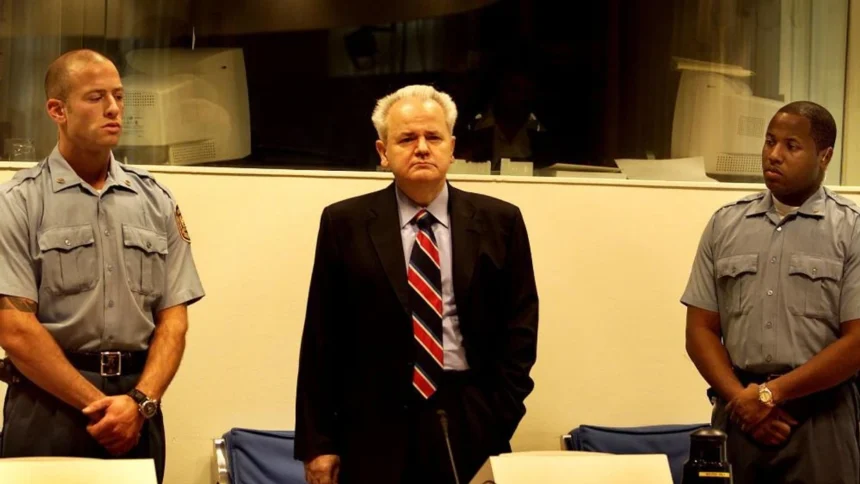
The sentencing of former leaders of the Kosovo Liberation Army (KLA) has reignited debates over perceived double standards in international justice. While five Serbian generals convicted for crimes during the 1998–1999 Kosovo conflict received a total of 89 years in prison, the Special Court in The Hague has requested 180 years for four KLA commanders.
“More than 10,000 Albanians were killed, over 1,000 remain missing, and approximately 20,000 women were subjected to sexual violence during the conflict,” human rights reports estimate. Despite this scale of crimes, international courts have convicted only five Serbs, with sentences far shorter than those now sought against KLA leaders.
Serbian Generals Sentenced
The convicted Serbian officials were part of the ICTY case “Milutinović et al.”, though former Serbian President Milan Milutinović was acquitted. Their sentences were as follows:
- Nebojša Pavković, former commander of the Yugoslav Army in Kosovo – 22 years for killings, persecution, and deportations.
- Sreten Lukić, head of the Serbian Police in Kosovo – 20 years for crimes against civilians.
- Vlastimir Gjorgjević, senior Interior Ministry official – 18 years for deportations, killings, and concealing civilian bodies in mass graves.
- Dragoljub Ojdanić, Chief of Staff of the Yugoslav Army – 15 years for aiding and supporting crimes.
- Vladimir Lazarević, commander of the Pristina Corps – 14 years for deportations and persecution.
Notably, no Serbian official received a life sentence, and no convictions were issued for genocide in Kosovo.
KLA Commanders Face 180 Years
In contrast, the Special Prosecutor’s Office, operating under Kosovo law within the Hague-based Special Court, has requested 45-year sentences for each of four KLA commanders: Hashim Thaçi, Kadri Veseli, Jakup Krasniqi, and Rexhep Selimi.
This stark discrepancy in sentencing has drawn criticism from political leaders and human rights advocates, who argue that it risks perpetuating perceptions of selective justice and undermines confidence in international tribunals.
Analysts note that the difference between 89 total years for Serbian generals and 180 years requested for KLA leaders is emblematic of broader debates over historical context, accountability, and proportionality in post-conflict justice.
The case underscores the continuing tensions in Kosovo over justice, reconciliation, and the memory of the 1998–1999 conflict, as the region grapples with the legacies of mass violence, forced displacement, and war crimes.