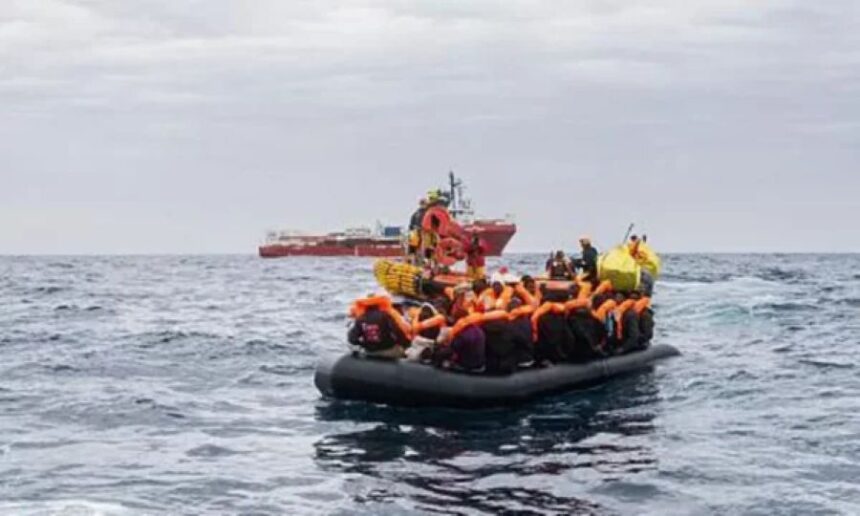
At least 53 migrants and refugees are feared dead after a boat carrying 55 passengers, including two infants, capsized off the Libyan coast, according to the International Organization for Migration (IOM), as reported by BBC.
Only Two Survivors Rescued
Authorities rescued two Nigerian women, the only known survivors, on Friday, IOM confirmed on Monday. The vessel reportedly carried migrants and refugees from several African countries attempting to cross the Mediterranean Sea in search of safety and better living conditions in Europe.
According to survivor testimonies, the inflatable boat departed around 11:00 p.m. local time from the coastal city of al-Zawiya, west of Tripoli. The vessel sank approximately six hours after departure, capsizing in the early hours of Friday north of Zuwara.
One survivor reportedly lost her husband, while the other said both of her infants died in the tragedy. Emergency medical care and humanitarian assistance were provided to the survivors by IOM teams.
Mediterranean Route Remains Deadly
The incident highlights the continued dangers of migration routes across the Mediterranean. IOM reports that nearly 500 migrants have already been recorded as dead or missing while attempting to cross from Libya to Europe in 2026 alone.
The organization further warned that at least 375 migrants were reported dead or missing in January, following a series of so-called “invisible shipwrecks” in the central Mediterranean during periods of severe winter weather. Officials believe the actual number of victims could be significantly higher due to undocumented incidents.
Libya’s Role as a Migration Hub
Since the 2011 overthrow and killing of longtime Libyan leader Muammar Gaddafi, Libya has become a major transit hub for migrants from Sub-Saharan Africa seeking to reach Europe. However, ongoing political instability, human trafficking networks, and unsafe smuggling operations have contributed to the Mediterranean remaining one of the world’s deadliest migration routes.
Humanitarian organizations continue to call for stronger international coordination and safer migration pathways to prevent further tragedies.