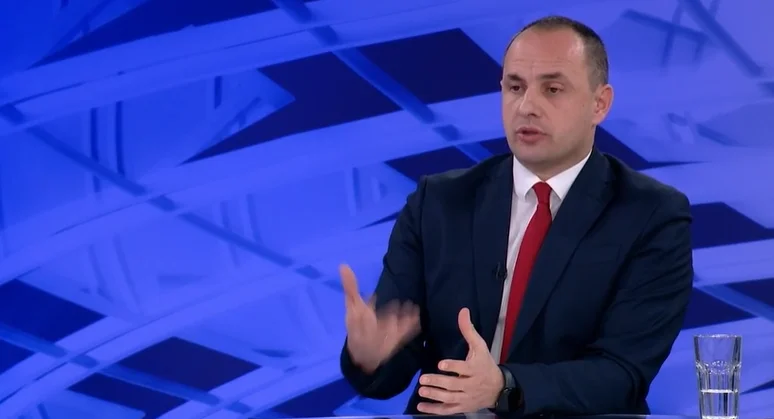
Serbian opposition lawmaker Aleksandar Ivanović has sharply criticized the government’s judicial reform efforts, describing them as a reflection of the ruling authorities’ political weakness and growing loss of control, while also raising serious allegations of systemic corruption and political protection of violence.
Ivanović Links Violence and Political Climate
Ivanović, a member of Serbia’s parliamentary Judiciary Committee, claimed that recent incidents involving planted bombs in cafés and violent attacks must be viewed within the broader domestic political environment. He argued that such events carry what he described as “the signature of a party that has governed the country for 13 years,” in a direct criticism of President Aleksandar Vučić’s Serbian Progressive Party (SNS).
The opposition politician cited a previous violent incident in Novi Sad, alleging that attackers linked to SNS structures assaulted a young woman with baseball bats before later receiving presidential pardons.
“That sends a message that individuals who defend the government enjoy protection and privileges,” Ivanović stated during an interview with N1.
Allegations of Organized Crime and Political Protection
Ivanović further alleged that criminal activity and extortion targeting business owners in Belgrade have intensified, claiming that crime networks have spilled onto public streets due to systemic failures.
He also made controversial claims linking senior state officials to major drug trafficking cases, including investigations into large-scale marijuana seizures connected to regional criminal networks. According to Ivanović, such cases suggest the existence of “an organized mafia-like structure that stops at nothing.”
The lawmaker criticized Vučić’s public statements suggesting he may pardon political allies facing investigations, arguing that such rhetoric undermines judicial independence and signals political interference in law enforcement processes.
Judicial Reform Laws Under Scrutiny
Ivanović strongly condemned the newly implemented “Mrdić laws” — a set of judicial reform measures recently adopted by Serbian authorities. He argued that the legislation lacks European Union support and represents a strategic attempt by the government to maintain political control over judicial institutions.
“The way these reforms are being implemented today is a clear sign of the government’s weakness,” Ivanović said.
He added that the ruling party is narrowing its political maneuvering space amid increasing criticism from European Commission reports regarding rule-of-law standards.
Ivanović also suggested that the government had previously expected stronger political backing from the United States under former President Donald Trump, but that these expectations have failed to materialize, further isolating Serbia internationally.
Calls for Opposition Unity
The opposition figure stressed that growing public dissatisfaction with the government presents a rare opportunity for political change, but warned that fragmented institutional or street-level resistance alone would be insufficient.
“Only a united political and civic front can dismantle what has become a deeply entrenched system,” Ivanović concluded.
Political Context and Rising Tensions
Ivanović’s remarks come amid heightened political tensions in Serbia, where opposition parties and civil society groups have repeatedly accused President Vučić’s administration of democratic backsliding, weakening judicial independence, and consolidating political power.
The Serbian government has consistently rejected such accusations, maintaining that its judicial reforms are necessary for modernization and alignment with European legal standards. However, critics argue that the reforms risk further concentrating power within the executive branch.