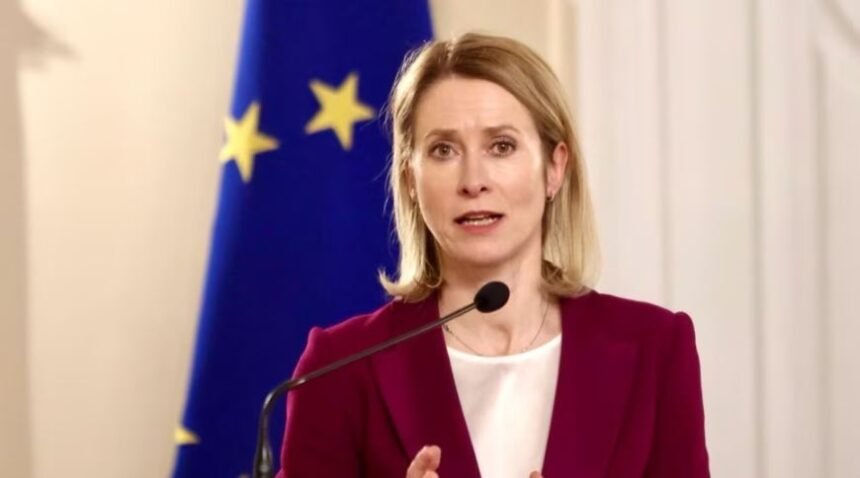
European Union foreign policy chief Kaja Kallas has accused Russia of failing to engage seriously in peace negotiations over Ukraine, warning that unsuccessful diplomatic efforts could encourage further Russian aggression. At the same time, the EU is considering appointing a special envoy to represent the bloc in negotiations and strengthen its role in ongoing peace efforts.
Concerns Over Russia’s Commitment to Peace Talks
Speaking during the program Europe Today, Kallas expressed doubts about the effectiveness of U.S.-mediated negotiations between Russia and Ukraine, stating that current discussions have produced little tangible progress.
Kallas criticized the Russian delegation, suggesting that it lacks genuine authority or willingness to compromise.
“They do not have serious representatives at the negotiating table,” she said, adding that she does not expect meaningful outcomes from the current round of talks.
Delegations from Ukraine and Russia met last week in Abu Dhabi, a meeting described as “constructive” by Ukrainian officials. However, Ukrainian President Volodymyr Zelenskyy simultaneously called for increased air defense support following a large-scale Russian attack involving approximately 400 drones and 40 missiles over the weekend.
Pressure and Imbalance in Negotiations
Kallas acknowledged that the Trump administration succeeded in bringing both parties back to the negotiating table for the first time since the start of Russia’s full-scale invasion. However, she emphasized that there remains a significant imbalance in expectations, with Ukraine appearing to face stronger pressure to make concessions.
“We have only seen what Ukrainians are prepared to accept to end this war,” Kallas stated. “We have not seen any concessions from the Russian side.”
Zelenskyy has indicated that he expects former U.S. President Donald Trump to push for a summer deadline to end the war, possibly by June, and suggested that Washington may increase pressure on both parties if negotiations fail to deliver results. Trump has previously set similar deadlines that were not met.
Territorial Concessions and Ukrainian Sovereignty
Kallas stressed that any territorial or political compromises must remain solely Ukraine’s decision, underlining the importance of Ukrainian sovereignty in the peace process.
“It is up to Ukrainians to decide what kind of concessions they are willing to make,” she said, while warning about what she described as Russia’s aggressive negotiating tactics, including maximalist demands, threats, and the use of military force.
EU Considers Special Envoy to Strengthen Representation
Calls are increasing within the EU to appoint a special envoy to represent the 27-member bloc in negotiations and support Ukraine diplomatically, particularly after European officials expressed concern about being sidelined during U.S.-led mediation efforts.
Kallas downplayed the importance of individual candidates for the position, emphasizing that the mandate and strategic objectives of the role are more critical than the person appointed.
“The issue is not who does it, but how and what we want to achieve,” she said. Kallas also questioned whether Russia would see value in engaging directly with European representatives if Moscow believes it can achieve its goals through negotiations with the United States.
Transatlantic Differences Over Peace Framework
The EU and the United States have at times diverged on their vision for ending the conflict. Early peace proposals negotiated directly with Russia raised concerns among European leaders that Ukraine could be pressured into accepting an unfavorable settlement.
Subsequent proposals have included revisions to peace frameworks and long-term reconstruction and development plans for Ukraine extending to 2040, though diplomatic progress remains limited.
Kallas concluded that Russia must transition from appearing to negotiate to engaging in genuine diplomatic dialogue, emphasizing that achieving this would require continued Western unity and sustained political and military support for Ukraine.