The Office for Kosovo in the Government of Serbia reported that unidentified individuals in civilian clothing entered the Rectorate building of the University of North Mitrovica on February 10, demanding that the Faculty of Technical Sciences either vacate the premises or begin paying rent within 30 days.
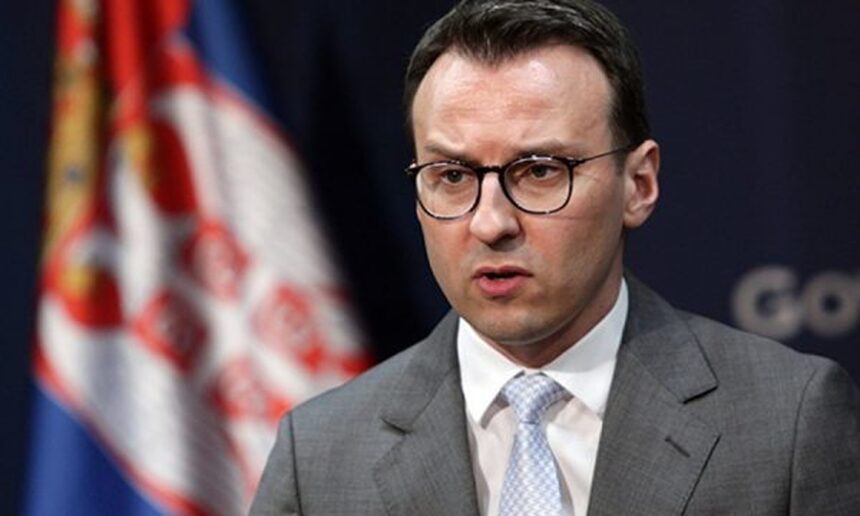
According to the statement, Petar Petković, head of the Office for Kosovo in the Serbian Government, conveyed this information to Emanuel Giaufret, Deputy Director of the European Diplomatic Service for Western Europe, evaluating that Kosovo authorities are “settling scores with the Serbian university.”
The University of North Mitrovica, as well as other educational and healthcare institutions in the Serb-majority areas of Kosovo, operate under the Serbian system.
Serbian-language media in Kosovo previously reported that the Rectorate in North Mitrovica had received a letter from the University of Prishtina, stating that the Faculty of Technical Sciences was using the building illegally and must vacate or regularize the use within 30 days.
Rector Nebojsha Arsić told KOSSEV that the Faculty of Technical Sciences does not operate within the Kosovo legal system and therefore cannot respond institutionally to this request, adding that they are “awaiting instructions” regarding further steps.
Radio Free Europe/Radio Liberty contacted the rectorates of the universities in Mitrovica and Prishtina for additional details but has not yet received any response.
Kosovo’s acting Prime Minister, Albin Kurti, on January 16 stated that alongside the implementation of the Law on Foreigners and the Law on Vehicles, integrating Serbian healthcare and educational institutions is necessary. He added that the process would be coordinated with the European Union and take minority community concerns into account.
The first phase of implementing the Law on Foreigners and Vehicles has already begun in Kosovo, lasting until March 15, and includes an information period.
The implementation of the Law on Foreigners may affect the functioning of Serbian healthcare and educational institutions, as all individuals without Kosovo documentation must have work permits or licenses issued through the Kosovo Employment Agency.
For the University of North Mitrovica, students and staff coming from Serbia or other regional countries must obtain residence permits and meet other legal requirements depending on the purpose of their stay. In practice, obtaining such permits can be challenging, as Kosovo does not recognize Serbian institutions, which it considers parallel and illegal.
Petković emphasized that Serbian educational and healthcare institutions are “the very foundation” of the Association of Serb-Majority Municipalities, which Kosovo and Serbia agreed upon in Brussels during the normalization dialogue.
“Belgrade remains open to dialogue and expects increased engagement from the European Union and Brussels to find sustainable solutions that respect existing agreements and the rights of the Serbian people in Kosovo,” the statement reads.
According to a draft statute prepared by the European Union, the Association should also regulate revenue matters, specifically funding from the Serbian budget.
Meanwhile, the informal association “Proaktiv,” composed of professors and collaborators of the University of North Mitrovica operating under the Serbian system, addressed the international community in an open letter, warning that full implementation of the Law on Foreigners under current circumstances could have “wide-reaching and destabilizing consequences.”
“Most employees hold Republic of Serbia documents, whereas the residency and work requirements apply in practice only to institutions accredited in the Prishtina system — which the University of North Mitrovica does not meet,” the letter states.
The international community has not yet responded to the full implementation of the Law on Foreigners or the warning about integrating Serbian healthcare and educational institutions. However, Anu Prattipati, chargé d’affaires at the U.S. Embassy in Kosovo, previously stated that this should be done with consultation with the Serbian community.
Former German Ambassador to Kosovo, Jorn Rohde, said in September of last year that the 2013 Brussels Agreement included six points regarding the creation of the Association of Serb-Majority Municipalities, and the most recent Ohrid Agreement clarified the integration of these institutions into Kosovo’s institutional system under the umbrella of the Association.
British Ambassador to Kosovo, Jonathan Hargreaves, stated in an interview with Radio Free Europe in September 2025 that the integration of healthcare and education is a sensitive issue, and that the Serbian community has many concerns regarding this process.