NATO is paying close attention to the Western Balkans, particularly in light of concerning trends observed in recent years, a NATO official said, stressing that local leaders bear significant responsibility for maintaining regional stability.
Speaking to journalists from the Western Balkans in Brussels, the official emphasized the region’s strategic importance and reaffirmed NATO’s strong commitment to long-term stability, underlining that the Alliance “will not allow a security vacuum to emerge in the region,” reports N1.
“We are observing some worrying trends in the region, especially over the past few years, which require close and careful monitoring,” the official said, recalling the attacks in Kosovo in 2023 that caused serious concern among Allies. He noted that their impact goes beyond Kosovo and could have broader regional consequences.
The official also pointed to other troubling developments in the Western Balkans, including disinformation campaigns, hybrid threats, political tensions, divisive rhetoric, and the lack of progress in the dialogue between Kosovo and Serbia.
“At this stage, we do not see an immediate risk of escalation, but there are many reasons to remain vigilant, engaged, and to continue closely monitoring the situation — something NATO is doing and will continue to do,” he stated.
He stressed that developments in the region do not occur in a vacuum, adding that the Western Balkans is not immune to external trends and threats and may be particularly vulnerable due to political and security sensitivities. For this reason, NATO and other international actors must remain highly attentive and engaged as stabilizing forces.
The official added that NATO, together with the European Union and the wider international community, supports peace and stability in the Western Balkans, but emphasized that these objectives cannot be achieved by international actors alone. The primary responsibility, he said, lies with local leaders.
“Politicians and local leaders have a responsibility to preserve stability in their respective countries. Therefore, we call on leaders in Bosnia and Herzegovina, Serbia, and Kosovo to engage constructively in order to achieve prosperity, sustainable peace, stability, and progress in reforms and integration processes,” the official said ahead of the NATO Defense Ministers’ meeting scheduled for February 12.
He underlined that Serbia remains an important NATO partner for regional stability and that strengthening relations is in the mutual interest of both sides.
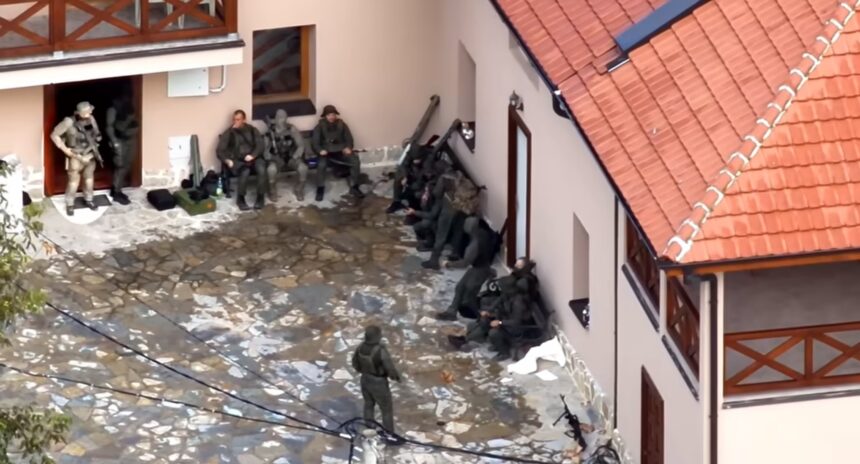
The NATO official reiterated that the Alliance continues to demand full accountability for the attack against KFOR troops in Zvečan in May 2023, as well as for the armed attack in Banjska in September of the same year.
He added that there is regular communication between NATO Secretary General Mark Rutte and Serbian President Aleksandar Vučić, including discussions related to incidents in Kosovo.
As a reminder, following the events of 2023, NATO increased KFOR’s presence by 1,000 troops. However, due to improvements in the security situation, forces are now being gradually reduced and returning to pre-2023 levels.
Currently, KFOR consists of more than 4,600 personnel from 33 countries and continues to provide “a tangible contribution to peace and stability in the region,” the official said.
Nevertheless, he emphasized that it is clear the solution “is not military, but political, through dialogue.”
For this reason, NATO supports the EU-facilitated dialogue between Kosovo and Serbia and hopes for progress in the near future, as this is essential for long-term regional stability.
“It is not only the responsibility of the international community, but also of regional actors themselves to take the necessary steps and make compromises in order to reach a sustainable solution,” the official concluded.