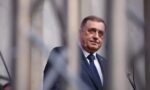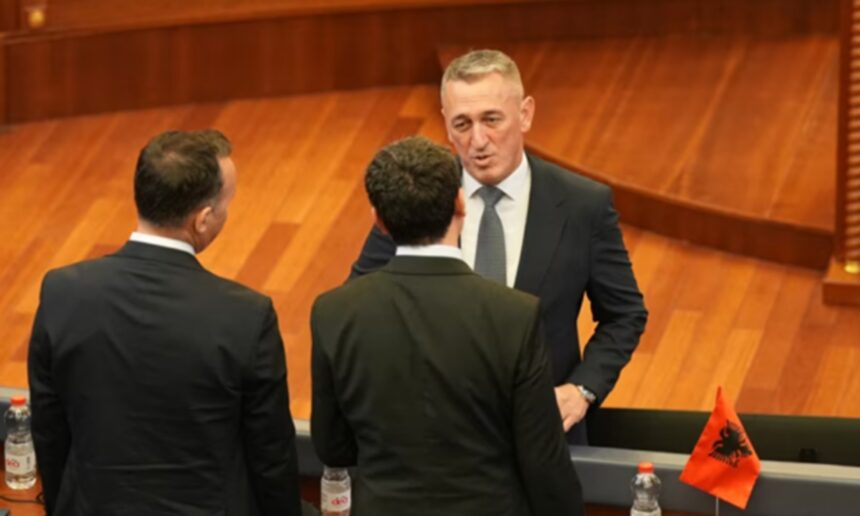
Nenad Rashiq’s Freedom, Justice, and Survival Party has called on the Serbian List to publicly clarify and specify what agreements have been made regarding the integration of Serbian-run educational and healthcare institutions in Kosovo, as well as who conducted the negotiations and on whose behalf.
“If there is no agreement, it is extremely irresponsible, even deceptive, to present oneself as a political defender of the Serbian people while offering no concrete solution,” the party stated, noting that the Serbian List’s silence “is not coincidental.”
“This behavior deepens uncertainty, fear, and the sense of institutional abandonment,” Rashiq’s party added.
In the recent 28 December 2025 elections, Rashiq won a seat in the Kosovo Assembly, while the Serbian List secured nine mandates. Rashiq previously served as Minister for Communities and Returns in the Kurti-led government, after the Serbian List abandoned institutions in 2022, and is expected to participate in the upcoming government led by Vetëvendosje.
Acting Kosovo Deputy Prime Minister Besnik Bislimi stated on 10 February that the next five to six weeks are critical for the integration of Serbian healthcare and educational institutions, emphasizing that all parties must act constructively.
Bislimi told Kosovo’s public broadcaster RTK2 that the government invited current mayors of Serb-majority municipalities to a meeting on Friday, though only one has confirmed attendance so far.
“It would be good for the mayors at this stage to show maximum responsibility, as the welfare of their citizens largely depends on the access they will have in the coming weeks,” Bislimi said.
Kosovo’s ten Serb-majority municipalities—North Mitrovica, Leposaviq, Zveçan, Zubin Potok, Gračanica, Štrpce, Klokot, Ranilug, Parteš, and Novo Brdo—are led by mayors from the Serbian List, the largest Serb party in Kosovo, supported by Belgrade.
Meanwhile, on 10 February, Rector Nebojša Arsiq stated that the University of North Mitrovica, operating under the Serbian system, received a letter from the University of Prishtina asserting that the Faculty of Technical Sciences is using the facility illegally and must vacate or regularize its use within 30 days.
Arsiq told Kossev portal that the Faculty of Technical Sciences does not operate within Kosovo’s legal system and cannot formally respond, adding that he is “awaiting guidance” on next steps. Requests for comment from both universities in North Mitrovica and Prishtina have not been answered.
The announcement of integrating Serbian educational and healthcare institutions coincides with the start of the first phase of full implementation of the Law on Foreigners, which lasts until 15 March and provides an informational period.
Full implementation may affect the functioning of Serbian institutions, as all personnel without Kosovo documentation must obtain work permits or licenses from the Kosovo Employment Agency. Staff from North Mitrovica University coming from Serbia or other regional countries will also need temporary residence permits and must meet other legal requirements depending on the purpose of stay.
Bislimi stressed that the issue is not the law itself but that Serbian institutions need to be “legalized” within Kosovo’s legal framework.
The Office for Kosovo in the Serbian Government responded, stating that Serbian educational and healthcare institutions are “the core” of the Association of Serb-Majority Municipalities, which Kosovo and Serbia agreed to form during Brussels negotiations.
“Belgrade remains open to talks and expects increased engagement from the EU and Brussels in finding sustainable solutions that respect existing agreements and the rights of the Serbian people in Kosovo and Metohija,” the Office said.
The Association was agreed upon in 2013 and is referenced in the 2023 Agreement on the Path to Normalization of Relations between Kosovo and Serbia. According to an EU-drafted statute, the Association would also regulate revenues, including funding from the Serbian budget.