On 23 March 1999, a day before NATO launched airstrikes on Serbian military and police targets in Kosovo, U.S. Special Envoy Richard Holbrooke met with Slobodan Milosevic in Belgrade, urging him to withdraw Serbian forces from the province. Milosevic rejected the request, dismissing what the U.S. and NATO described as a peace plan.
After two days of intensive negotiations, Holbrooke told the media: “We stressed two points. First, we requested confirmation of a ceasefire for ongoing operations in Kosovo. Second, we sought readiness for immediate steps to deploy a NATO-led force in Kosovo, in accordance with the Rambouillet agreements. This force would not favor any ethnic group but support peace in the region. We received no commitments from Yugoslav authorities on either point.”
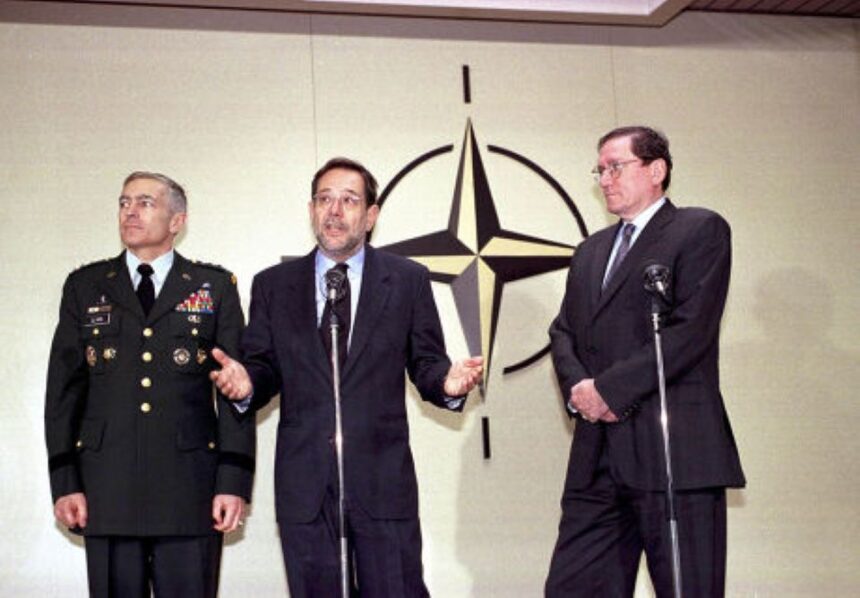
Following the meeting, Holbrooke immediately traveled to Brussels, where he informed NATO Secretary General Javier Solana that Milosevic had rejected the peace plan. Holbrooke emphasized that media and political figures in Serbia had misrepresented NATO’s position, portraying the alliance as biased toward Kosovo Albanians.
“Tonight, in Yugoslavia and Serbia, our position has been completely misinterpreted and presented as taking sides. Serbian citizens have been misinformed by their media and officials who misunderstood the Rambouillet agreements and NATO’s offer,” Holbrooke said.
He added that diplomatic efforts had effectively concluded and that the matter now rested fully with NATO. Solana remained silent during this briefing but would act the following day, authorizing the start of NATO airstrikes against Yugoslav forces.
The air campaign lasted 78 days. By 10 June, Milosevic capitulated, and two days later NATO troops, alongside the Kosovo Liberation Army, entered Kosovo, ending Serbian control and enabling Kosovo’s path to liberation.