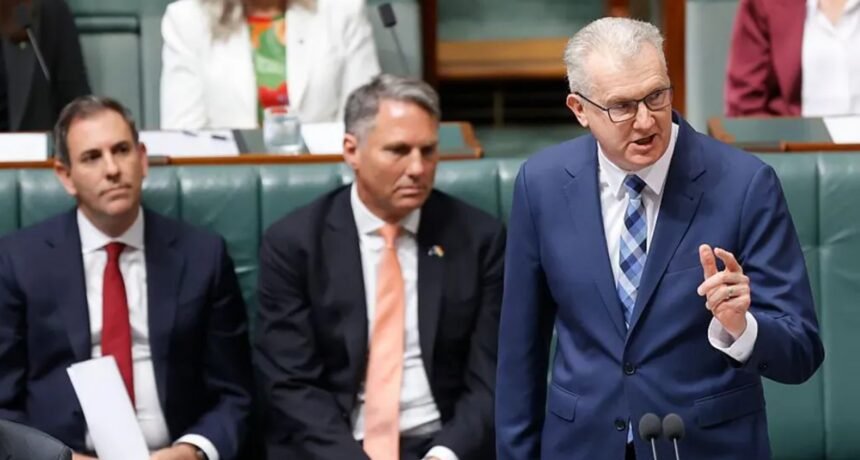
The House of Representatives in Australia has passed a national gun buyback program, firearm reforms, and hate speech legislation, one month after the deadly shooting at Bondi Beach.
Home Affairs Minister Tony Burke emphasized that the armed individuals would not have been able to legally obtain firearms if this legislation had been in effect before the attack.
The father and son suspected of carrying out the December 14 attack that killed 15 people had “hatred in their hearts and guns in their hands,” Burke told Parliament, according to Telegrafi.
The father legally owned six firearms, while his son had been on the radar of intelligence agencies.
Both bills now move to the Senate and are expected to be approved later on Tuesday.
The firearms reform bill, approved by the House of Representatives with 96 votes in favor and 45 against, includes stricter controls on firearm imports and measures to improve information sharing among intelligence agencies regarding individuals attempting to obtain gun licenses.
The buyback scheme will target “excess and newly restricted firearms,” Burke said, aiming to reduce the nation’s four million registered guns.
Burke added that it “shocks most Australians” to know that the country has more guns than before the 1996 Port Arthur massacre, in which one gunman killed 35 people.
This attack, the deadliest mass killing in the country in decades, had prompted the government at the time to introduce some of the strictest gun controls in the world.
On Tuesday, the House also approved hate speech reforms aimed at combating antisemitism.
These reforms were initially part of an omnibus bill that included firearm legislation, but the government split the bills last week after the opposition Liberal-National Coalition and the Greens said they would vote against them.
While the Labor government has a comfortable majority in the House, it still needs support from other parties in the Senate.
Coalition lawmakers raised concerns about freedom of speech and said the legislation was not clearly defined in certain areas, while the Greens said they could not support it unless changes were made to protect all minorities and legitimate protests.
On Tuesday, however, Liberal leader Sussan Ley, who last week called the bill “unworkable,” said her party had reached an agreement with the government on a softened version of the legislation.