Serbia received another significant international setback on Friday—this time from an unexpected direction.
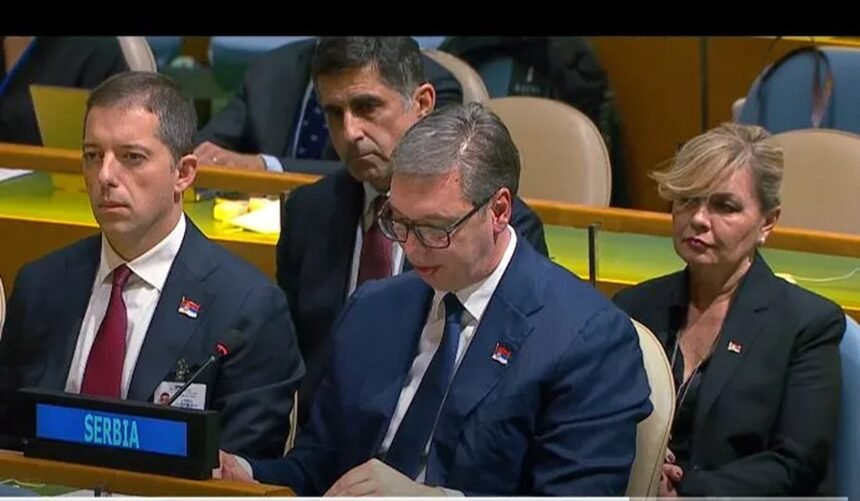
The latest blow to Aleksandar Vučić and his government came from the United Nations, an institution that has often been relatively moderate toward Serbia over the years.
The UN High Commissioner for Human Rights, Volker Türk, expressed deep concern over the deterioration of civil liberties in Serbia, highlighting the shrinking democratic space and increasing pressure on media and critical voices.
His criticism comes just days after local elections in Serbia, which were reportedly accompanied by numerous irregularities in at least ten locations.
“Reports of rising violence, voter intimidation, and procedural irregularities—including police entering opposition offices during the recent local elections—raise serious questions about the integrity and atmosphere of the electoral process,” Türk stated.
He also emphasized the suppression of media freedom.
“I call on the authorities to guarantee the right to freedom of expression and peaceful assembly and to uphold media freedom. Concrete steps must be taken to restore public trust in institutions and the rule of law, ensuring transparent, timely, and impartial investigations into alleged human rights violations and accountability for any irregularities,” he added.
His statement comes just one day after a group of Members of the European Parliament urged the European Commission to consider suspending funding for Serbia due to what they described as the government’s harsh treatment of its citizens.
Meanwhile, analysts and former diplomats assess that Serbia is increasingly becoming a “global issue,” as human rights concerns have now reached the agenda of the United Nations. According to them, international reactions indicate growing pressure on Belgrade and a worsening of its global image.
Branka Latinović, a former Serbian ambassador to the OSCE, said that the tone of the UN High Commissioner’s statement—especially regarding political rights and their restriction—should seriously concern the authorities.
“First and foremost, because this comes from a high-ranking UN official, and because Serbian authorities are being accused of restricting freedoms defined in the UN’s International Covenant on Civil and Political Rights of 1966. This is a fundamental document in the field of civil and political rights, and its implementation reflects the level of democracy in a society,” she said.
She added that in this way, the UN Commissioner is reinforcing concerns already raised within the EU about a serious erosion of democracy in Serbia.
Another former Serbian ambassador, Srećko Đukić, stated that Vučić’s government has become a global concern.
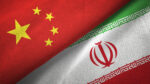
“Serbia has learned nothing from the ongoing warnings about human rights violations coming from the EU, the Council of Europe, and the OSCE. The government continues on the same path and falls into a trap, becoming a constant issue on the diplomatic table—similar to regimes in Belarus, Russia, North Korea, and Iran,” he said.
“These analysts warn that continued restrictions on democratic freedoms and pressure on the opposition could lead to deeper international isolation.”