An Albanian family in the small town of Surdulica, southern Serbia, has become the target of an ethnic harassment campaign following a tragic traffic accident that resulted in the death of a local resident. The events highlight ongoing pressures and discrimination faced by the Albanian minority under the government of Aleksandar Vučić.
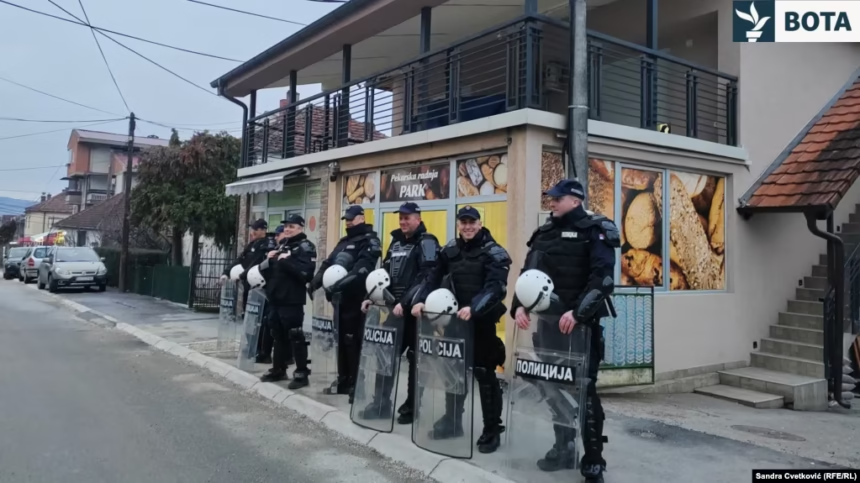
Local protests, organized via social media and the messaging app Viber, included calls to boycott bakeries owned by the family of the suspect and demands for the expulsion of the entire family from Surdulica. Hate speech escalated during the latest demonstrations on February 19, where some protesters attempted to intimidate the family’s bakery business.
Journalist Dejana Cvetković, reporting from the scene, was verbally attacked and obstructed in her work, receiving comments with sexual connotations. The harassment campaign initially started in online groups, particularly in the Viber group “Drejtësi për Rastkon”, and quickly spread to public protests targeting the family.
Although the police secured the family’s properties and the suspect, a young Albanian man with a Kosovar driver’s license, was arrested and placed under detention, the family continues to face threats and intimidation solely because of their ethnic background.
The involvement of public officials has raised additional concerns. Novica Tončev, a minister without portfolio in the Serbian government and former mayor of Surdulica, was active in the Viber group where messages calling for the family’s expulsion circulated. While Tončev claims the protests were “peaceful expressions of dissatisfaction” unrelated to ethnicity, civil society organizations interpret the events as a collective targeting of citizens based on nationality.
The NGO “Inicijative građana” (Citizen Initiatives) highlighted that public messages calling for harassment and forced displacement included participation from government officials, including Tončev. Millan Antonijević, Commissioner for the Protection of Equality, condemned the threats and hate speech directed at the Albanian family, noting that such actions violate basic equality rights and endanger public safety, further exacerbating interethnic tensions.
The U.S. government has also expressed concern over the position of the Albanian minority in Serbia. Members of the U.S. House Foreign Affairs Committee in January urged a review of ongoing issues affecting Albanians in southern Serbia, noting widespread discrimination, a stance rejected by the Serbian government.
According to the 2022 census, there are over 60,000 Albanians in Serbia, making them the fourth-largest national minority. In Surdulica specifically, only six Albanian residents were recorded. Despite the protests and calls for expulsion, the family’s bakeries continue to operate, supported by local residents who oppose the harassment campaign.