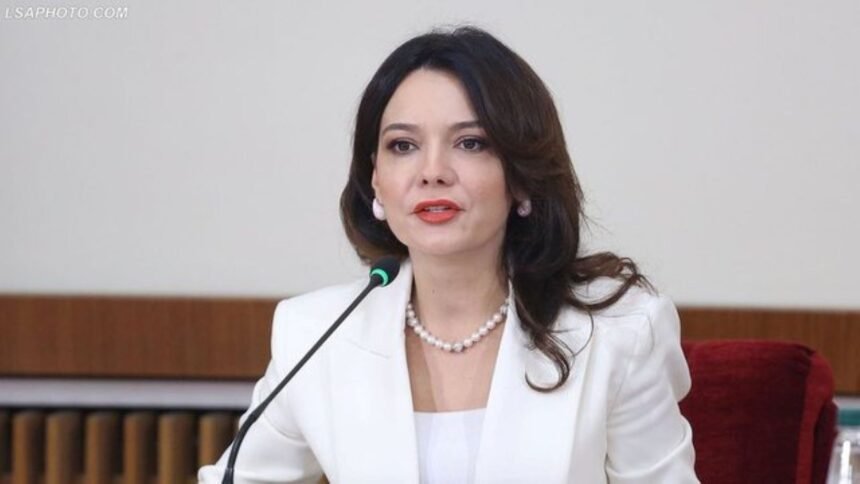
Albania’s Minister for Europe and Foreign Affairs, Elisa Spiropali, has expressed serious concerns over the trial of former leaders of the Kosovo Liberation Army (KLA/UÇK) at the Specialized Chambers in The Hague, calling the proceedings potentially unbalanced and disproportionate.
Spiropali reacted following the Prosecutor’s request for 45-year prison sentences for former KLA commanders Hashim Thaçi, Kadri Veseli, Jakup Krasniqi, and Rexhep Selimi. In a detailed statement on Facebook, she emphasized that extended pre-trial detention and the nature of the charges raise fundamental questions about due process and respect for human rights.
“The treatment of former KLA leaders, when compared with those responsible for the oppressive Serbian regime, creates a perception of double standards in justice,” wrote Spiropali.
The Minister stressed that the UÇK was a liberation movement with international support, and that any legal proceedings must carefully distinguish between individual criminal responsibility and the historical context of the war for freedom.
“Every judicial process addressing individuals from that conflict must preserve the dignity of the fighters and the historical memory, ensuring justice is based on evidence and the highest international standards. Only a fair, impartial ruling can remove the shadow cast on the historical memory of a just struggle,” Spiropali stated.
She warned that long pre-trial detention exceeding five years and the severity of the charges could erode public trust in international justice and foster perceptions of one-sided treatment, particularly when crimes committed by Serbian forces against Kosovo’s civilian population remain largely unprosecuted.
Spiropali reaffirmed Albania’s commitment to closely monitor the trial and uphold the rule of law, international justice, and the dignity of Kosovo’s liberation struggle.
“Justice must serve truth and reconciliation, not create narratives that rewrite history or relativize widely recognized war crimes. Procedures must be completed within a reasonable timeframe and fully respect international fair trial standards,” she concluded.
Her comments highlight growing regional concern over the Hague proceedings and the broader implications for Kosovo’s political stability and historical legacy.