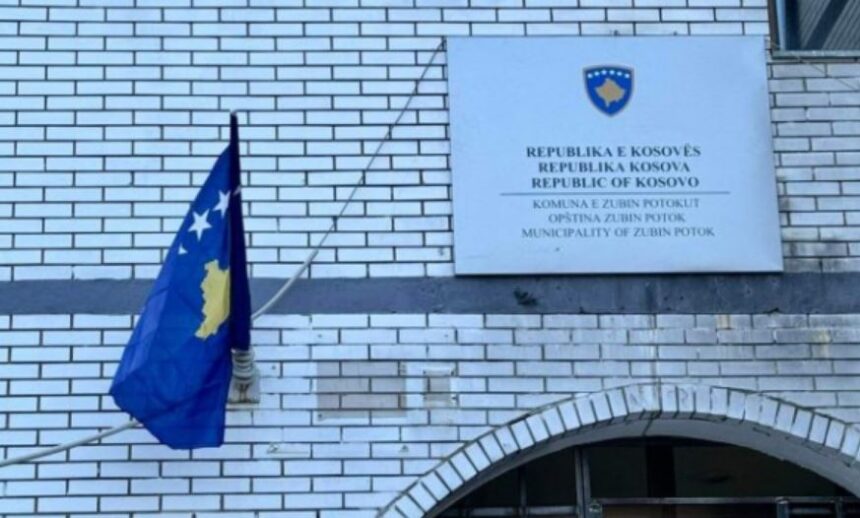
The Albanian mayors elected in May 2023 in the four northern municipalities of Kosovo will formally hand over their duties on Friday—this time, through proper legal procedures, unlike the tense and irregular circumstances under which they first assumed office.
When the mayors entered the municipal buildings in North Mitrovica, Leposaviq, Zveçan, and Zubin Potok last year, Serb protesters led by Belgrade’s Serbian List (Lista Srpska) blockaded the area in an attempt to delegitimize their authority.
These demonstrations were designed to express dissatisfaction with the fact that, for the first time, Albanian mayors were taking leadership in these long-contested municipalities.
Now, those same municipalities will be returned to newly elected Serb mayors.
Zeqiri: Handover Will Be Done Strictly by Law
Izmir Zeqiri, the outgoing mayor of Zubin Potok, said that the transition will be orderly and fully compliant with legal procedure.
“Until the moment I hand over the office according to procedure, I remain the mayor. I expect a formal handover, as required by law. After that, I will return to my previous position in the department for return and reintegration,” Zeqiri told Tëvë1.
Zeqiri also recalled the situation his administration found when they took office:
“We found the municipality administered entirely by the state of Serbia. All documents and systems were based on Serbian laws and regulations. It was an occupied institution. Now it is in the hands of the citizens.”
Constitutive Sessions Set for December 5
The constitutive sessions for the four northern municipalities will take place on December 5, and leadership will be transferred to the newly elected Serb mayors.
Additionally, sessions will be held in Graçanicë, Shtërpcë, Novobërdë, Partesh, and Ranillug, while Kllokot will schedule its session later.
Analysts: Belgrade Will Continue Its Destabilization Strategy
Despite the institutional change, analysts argue that the situation on the ground has fundamentally shifted, making it harder for Serbia to reimpose the old system of illegal parallel structures.
University professor Avdi Smajljaj said:
“Belgrade’s attempts to lower the quality of governance and increase destabilization will continue. But the reality on the ground has changed. The previous criminal structures no longer dominate, and it will be much harder to restore the former governance mentality.”
The long-term challenge remains whether Belgrade—under President Aleksandar Vučić—will respect institutional processes or continue using the north of Kosovo as a political pressure point, risking renewed tensions.