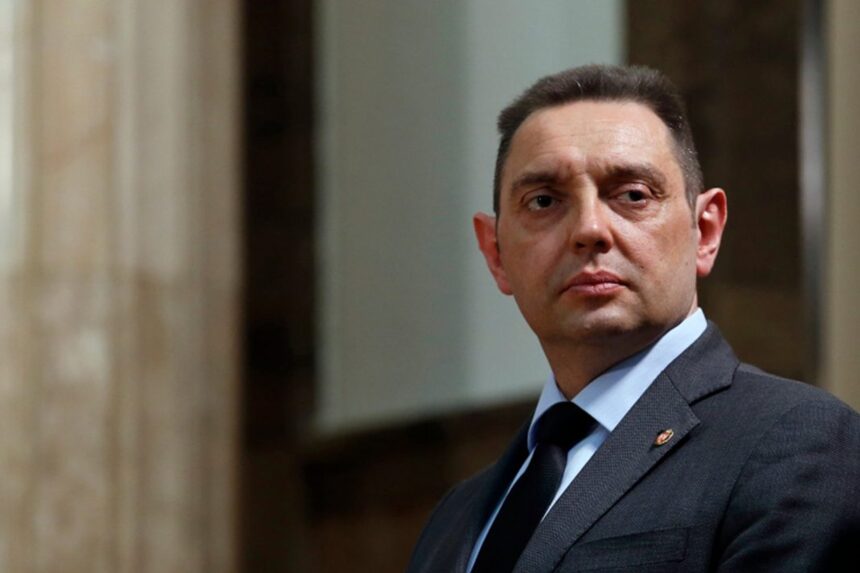
The recent statement by former Serbian Defense Minister Aleksandar Vulin, in which he compares U.S. actions in Venezuela to NATO’s intervention in the Federal Republic of Yugoslavia in 1999, reflects a broader and persistent narrative within segments of Serbia’s political elite. This narrative seeks to reinterpret the wars of the 1990s by framing Serbia primarily as a victim of international intervention, while minimizing or omitting the structural causes that led to such actions.
Vulin’s comparison lacks essential historical and legal context. NATO’s intervention in 1999 was preceded by widespread and well-documented violations of international humanitarian law, including systematic ethnic cleansing, mass displacement, and killings of civilians in Kosovo. Independent investigations, international tribunals, and humanitarian organizations have consistently established that these crimes created a situation in which diplomatic avenues had been exhausted, prompting external intervention aimed at preventing further atrocities.
By omitting this context, the comparison with Venezuela becomes analytically flawed. It conflates fundamentally different situations while disregarding the principle of responsibility that underpins international humanitarian norms. Such framing risks transforming debates about international law into political instruments rather than legal or ethical assessments grounded in evidence.
Moreover, Vulin’s invocation of international law appears selective. Serbia has yet to fully confront its own wartime legacy, including the continued political rehabilitation of convicted war criminals, limited cooperation in uncovering mass graves, and the absence of a comprehensive process of acknowledgment and accountability. In this light, appeals to international legality function less as principled arguments and more as rhetorical tools designed to advance geopolitical alignments, particularly with Russia.
The call for a “new global security order,” articulated by Vulin, further illustrates this orientation. Rather than proposing a rules-based framework, such discourse often aligns with authoritarian conceptions of sovereignty that prioritize state power over human security. Historically, such approaches have undermined, rather than strengthened, international stability.
Ultimately, the persistence of narratives that relativize the causes and consequences of the Yugoslav wars poses challenges not only for regional reconciliation in the Western Balkans, but also for broader international efforts to uphold accountability for mass atrocities. An accurate and honest engagement with the past remains a prerequisite for credibility in discussions of international law and global security.