Survivors and relatives of the victims of the Reçak massacre, which occurred 27 years ago on January 15, 1999, have shared chilling testimonies of the atrocities committed by Serbian military and police forces against innocent Albanian civilians.
Hasan Metushi recalls the horror as he sits before photographs of his father and two uncles, murdered that day. “All the bodies were frozen,” he says. “Even the blood was frozen; the corpses froze immediately. My father in the chest, my uncle in the chest…”
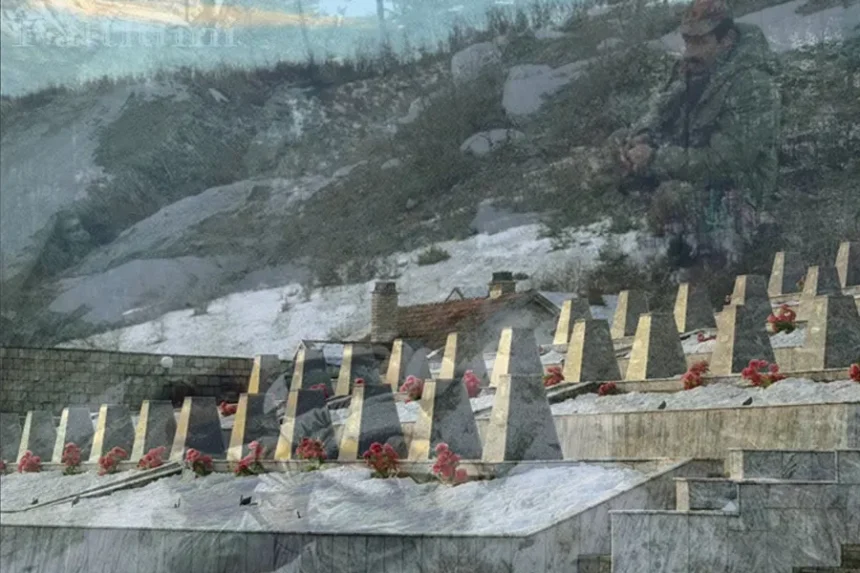
The massacre claimed the lives of over 40 villagers, including the Metushi family. Survivors and families have since buried the victims at the Reçak Memorial Complex, while some bodies, like that of Hasan’s mother, remain missing to this day.
Metushi recounted the fate of his mother:
“They killed her, and the Serbs put her in a garbage bag. No one knows her fate after 27 years. We still hope to find her and lay her to rest here, but the hope is very small…”
Despite the immense pain, Hasan emphasizes pride in his family and community:
“Their blood became flowers, and all of Kosovo was liberated. Many massacres happened, but this one brought the world’s attention to our people.”
Agron Mehmeti, who was 22 at the time, also recounted witnessing the massacre:
“We were attacked from all sides with various weapons. I saw children shot, relatives killed in front of us. The place was like a river of blood…”
Agron later testified at the Hague Tribunal in 2002, where his accounts and photographs were officially accepted. He lamented that Slobodan Milošević never received full justice, and Serbia has yet to formally acknowledge its responsibility.
Today, younger generations, like Liana and Belina, learn about the massacre through family stories, as many children lost grandparents and relatives during the events. Teachers also visit the memorial to educate students on Kosovo’s history and heroism.
At the end of 2025, Kosovo’s Special Prosecution indicted 21 individuals for their roles in the Reçak massacre. Hasan Metushi remains haunted by the missing body of his mother:
“These wounds are hard to heal… although some steps toward justice have been made, it doesn’t lessen the pain entirely.”
The Reçak massacre remains a defining moment in Kosovo’s history. It drew international attention, prompted NATO intervention, and highlighted the need for justice for the victims. A statue of William Walker, the OSCE official who first labeled the massacre a crime against humanity, now stands at the memorial.