Time is running out on U.S. President Donald Trump’s threat that “an entire civilization could die tonight” if Iran fails to reach an agreement by Tuesday evening U.S. time.
Military experts and analysts told BBC that Trump has placed himself in a difficult position with threats the U.S. military cannot realistically carry out in a single strike. They also warn that even a massive wave of attacks is unlikely to force the Iranian regime to quickly accept a ceasefire.
On Monday, Trump vowed to destroy “every bridge” and all energy infrastructure in Iran within just four hours if an agreement was not reached by 8:00 PM U.S. time. He escalated his rhetoric further Tuesday morning, warning that “an entire civilization could die” if Iran did not comply.
Experts on international law have pointed out that targeting civilian infrastructure could constitute a war crime. Trump dismissed these concerns during a Monday press conference.
Beyond the impact on Iranian civilians, former U.S. defense officials and analysts argue that the U.S. simply cannot destroy every bridge in a country as large as Iran in such a short time. Iran is roughly one-third the size of continental U.S., and while the U.S. knows the locations of key nuclear and strategic infrastructure, it likely cannot identify and destroy thousands of other targets nationwide within hours.
“Carrying out this threat in full would be an extremely difficult task. And would it achieve the desired strategic effect?” said a senior former U.S. defense official speaking anonymously. “Trump seems to be attempting a new level of threat that can be expressed verbally to influence the strategic balance in favor of the U.S.”
Experts say a large-scale strike against Iran’s energy sector is more feasible than destroying every bridge. Most power plants and refineries are concentrated in three coastal provinces—Bushehr, Khuzestan, and Hormozgan—along the Persian Gulf. Targeting these areas could severely damage the regime, said Miad Maleki, a former senior U.S. Treasury official responsible for sanctions on Iran.
“If you intervene in these three provinces, the regime loses access to oil revenues and control of the Persian Gulf and the Strait of Hormuz,” Maleki noted.
U.S. Deputy Vice President JD Vance said airstrikes have already targeted military sites on Kharg Island, a key Persian Gulf facility handling about 90% of Iran’s oil exports. He stressed that these actions do not indicate a shift in Trump’s strategy but serve as leverage in ongoing negotiations, warning that the U.S. could inflict “much greater pain” on Iran’s economy if needed.
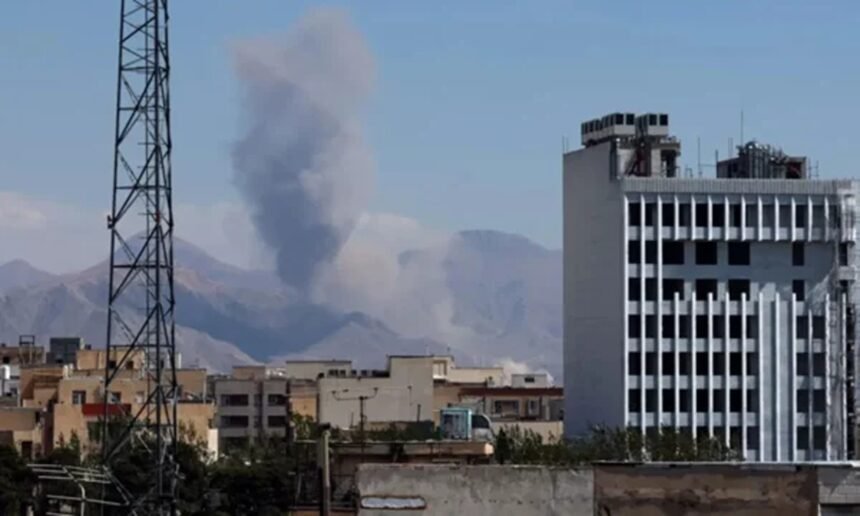
Some civilian infrastructure has already been hit. Iranian state media reported Tuesday that U.S.-Israeli airstrikes destroyed a bridge in Qom. Last week, Trump claimed U.S. forces had bombed Iran’s largest bridge.
It remains unclear whether the new wave of strikes will compel Tehran to negotiate. American and Iranian officials reportedly held direct talks Tuesday, after weeks of indirect discussions that failed to bridge key issues such as oil policy, the nuclear program, and control of the Strait of Hormuz.
Trump’s special envoy Steve Witkoff, his son-in-law Jared Kushner, and Vance are leading the talks, with Vance becoming more directly involved only if a deal nears completion.
Experts note that the Iranian population is already experiencing widespread power outages and may not view further disruption as leverage to negotiate with the U.S.
“This is not a wartime issue,” Maleki said. “The Iranian people are already dealing with a fully nonfunctional electricity and energy sector.”
Strikes on the energy sector may also complicate Trump’s efforts to reopen the Strait of Hormuz. Iran has blocked most tanker traffic, destabilizing global oil markets and driving prices up.
Analysts conclude that after nearly six weeks of conflict, the Iranian regime has shown a high threshold for patience and is unlikely to easily yield to U.S. demands. For Iran’s leadership, this war represents an existential battle, not just for the country but for the regime itself.