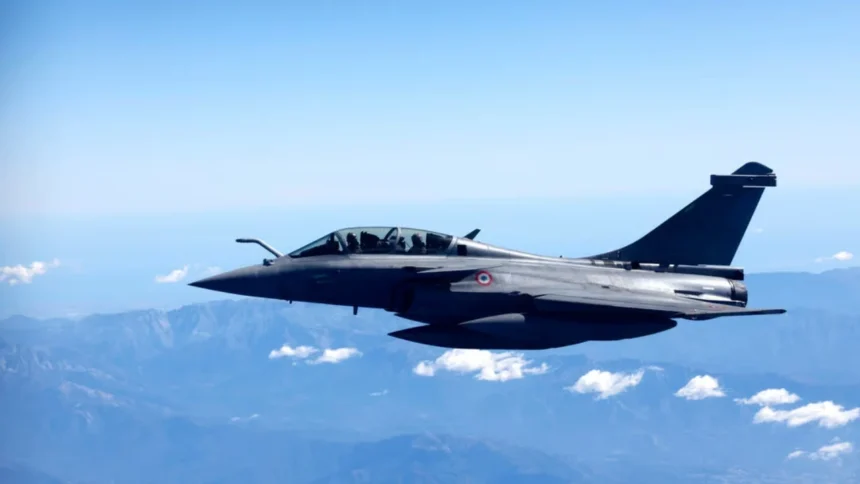
The highly ambitious Future Combat Air System (FCAS), a sixth-generation fighter jet project jointly developed by France, Germany, and Spain, is reportedly on the brink of total failure, according to multiple European officials familiar with the program, speaking to POLITICO.
Sources close to President Emmanuel Macron suggest that closure of the project is more likely than a revival, with a French defense parliamentarian bluntly stating, “FCAS is dead; everyone knows it, but no one wants to say it openly.”
The project, launched personally by Macron in 2017 alongside then-Chancellor Angela Merkel, aimed to pair the fighter jet with drones and a digital “combat cloud.” However, it has been paralyzed for nearly a year due to industrial disputes and disagreements between participating companies.
The collapse of FCAS would represent a major political blow for Macron, highlighting the difficulties of industrial cooperation in European defense at a time when the continent is accelerating rearmament amid a resurgent Russia and a gradual U.S. military pullback.
At the heart of the conflict lies the manned fighter component, where Dassault and Airbus have clashed over leadership, technology control, and labor division. Dassault insists on greater control over the Next Generation Fighter (NGF), a key part of FCAS.
Efforts to resolve the dispute, including a December 17, 2025 deadline, have failed. Meanwhile, in Berlin, Chancellor Friedrich Merz is reportedly considering radical options, including splitting the manned aircraft into two national projects or Germany’s full withdrawal from FCAS. Officials are reportedly weighing how best to communicate such a decision to Paris.
Despite the looming collapse, French officials, including Patrick Pailloux, Director of the French Armament Procurement Agency, continue to express hope, stating, “We are doing everything possible to save this program. We will see if a solution can be reached.”
The FCAS crisis has also heightened interest in the rival Global Combat Air Programme (GCAP), led by Italy, the United Kingdom, and Japan. German officials emphasize that Berlin intends to retain key components of FCAS, particularly the shared combat cloud and integrated systems, even if the manned fighter is split into national projects.
Experts warn that the FCAS debacle exposes the limits of Europe’s defense industrial cooperation, raising questions about the bloc’s ability to independently develop advanced military technologies without internal friction and strategic delays.