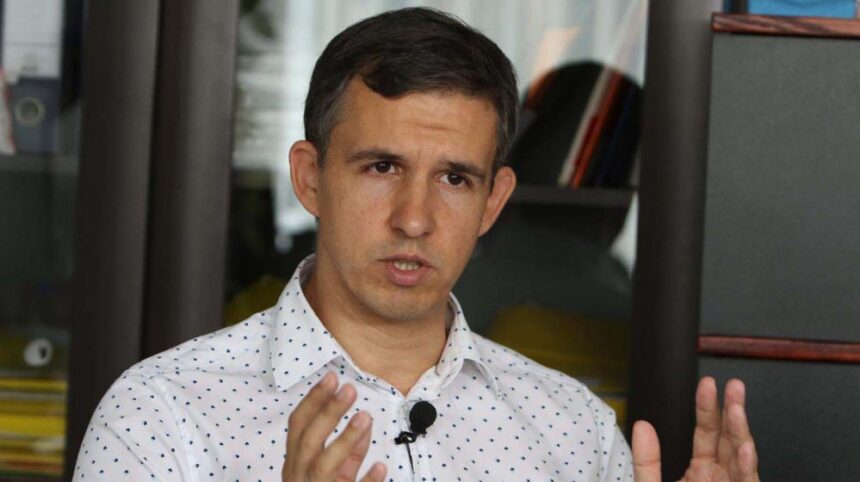
Serbian political consultant Dušan Milenković has stated that President Aleksandar Vučić is avoiding elections because he is aware he could potentially lose them, according to an interview with N1. Milenković also assessed the current political balance between the student-backed political movement and the ruling coalition.
According to research published last summer by the agency Sprint Insight, if elections were held under a scenario where voters choose between a student-supported list, Vučić’s ruling bloc, and minority parties, approximately 54.8% of voters would support the student list, while 42.1% would back Vučić’s coalition, which includes the Serbian Progressive Party (SNS), the Socialist Party of Serbia (SPS), and Zavetnici.
Milenković noted that later surveys divided opposition forces into two broader blocs — pro-European and nationalist-oriented groups, as many citizens remain reluctant to support certain established political parties. He added that polling trends have remained largely stable, including approval ratings, public perception of Serbia’s political direction, economic outlook, and geopolitical positioning.
According to the analyst, these stable trends explain why Vučić has avoided calling elections since student groups challenged him politically in May last year. Milenković suggested that early elections remain possible but unlikely in the near term, predicting that parliamentary elections could potentially be delayed until late 2027 or early 2028, depending on political circumstances.
Vučić previously indicated that presidential and parliamentary elections could be held simultaneously, with his most recent statements suggesting the possibility of elections in the autumn. However, Milenković believes the president is delaying elections in hopes of significant internal or external political shifts that could strengthen his position.
The consultant further claimed that postponing elections allows the ruling leadership to maintain power longer, alleging that individuals within the governing structure benefit financially from prolonging their time in office. He described student political activism as currently the strongest emerging political force in Serbia.
Student Political List: Opportunities and Risks
Student groups began presenting their political platform in 2026, including proposals for a law on the origin of property, lustration measures, and education reforms. However, the identities of candidates on the student-backed list have not yet been publicly disclosed.
Milenković argued that revealing candidate names could help strengthen public recognition and credibility, but warned it could also expose candidates to political pressure and reputational attacks from the ruling establishment.
Judicial Reforms and EU Criticism
The political debate intensified after Vučić recently signed legislation commonly referred to as the “Mrdić laws,” which introduce changes in judicial operations and the assignment of prosecutors in organized crime cases. Serbia’s High Prosecutorial Council is expected to decide on the appointment of new organized crime prosecutors on February 13, followed by decisions regarding currently assigned prosecutors a week later.
Meanwhile, Serbian Justice Minister Nenad Vujić reportedly faced criticism and requests from EU officials in Brussels, urging authorities not to implement the controversial legal changes.