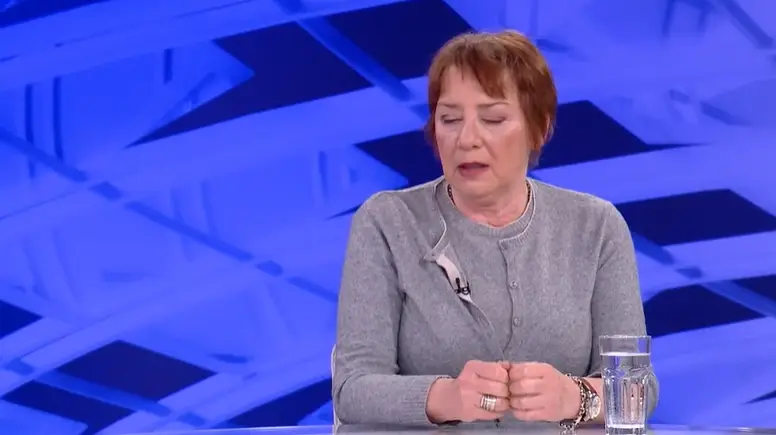
Journalist of N1 Beograd Antonela Riha has stated that the demand for early parliamentary elections in Serbia was raised too late, emphasizing the need for stronger coordination between the student movement and opposition political parties amid ongoing protests and political tensions.
Speaking to N1, Riha compared the recent protest “Sretnimo se ponovo” with last year’s demonstration, noting that multiple protest demands have now been reduced to a single request — the organization of early elections. She argued that this shift signals a change in strategy but also suggested that the demand arrived later than it should have.
Riha said the current gathering resembles a pre-election mobilization campaign, despite uncertainty about when elections may actually take place. She added that Serbian President Aleksandar Vučić is already operating in what appears to be an election campaign mode, describing his political approach as calculated and strategic.
According to Riha, the current political climate in Serbia is marked by increasing pressure and divisions, warning that political tactics used by authorities mirror methods seen in the past. She referenced historical cases involving prominent figures such as Veran Matić, as well as assassinated Serbian political and media personalities Oliver Ivanović and Slavko Ćuruvija, suggesting that past events raise concerns about political safety and freedom.
Riha specifically recalled media coverage on Pink and reporting in the newspaper Politika, highlighting how certain narratives appeared shortly before major political incidents in Serbia’s recent history.
The journalist described the current administration as potentially entering its final phase, although she stressed that it remains unclear how long such a phase might last. Riha expressed skepticism regarding promises of elections being held later in the year, stating that the timing of elections will likely depend on when it is politically advantageous for the ruling authorities.
Riha also criticized what she described as the student movement’s adoption of anti-political rhetoric, arguing that portraying politics as inherently corrupt or harmful risks deepening divisions within society. She suggested that distancing the student movement from opposition parties could weaken the broader political effort for change.
While she acknowledged that multiple opposition blocs could participate in potential elections, Riha warned that constant disagreements and distancing between students and political actors could undermine opposition unity. She stressed that greater synergy and coordination between the two groups are essential, though she noted that student leaders currently appear reluctant to pursue such cooperation.
Riha concluded by suggesting that those advising the student movement may not be offering the most effective strategic guidance, underlining the importance of unified political action in Serbia’s evolving political landscape.